
Table of Contents
- Measure Your Hallway and Plan Your Layout
- How to Create a Hallway Gallery Wall
- Hallway Picture Hanging Height and Placement
- Hallway Art Spacing and Frame Selection
- Narrow Hallway Wall Art Ideas to Maximize Space
- Lighting and Final Touches
- Frequently Asked Questions
Last Updated: October 6, 2026
Measure Your Hallway and Plan Your Layout
Learning how to arrange art in a narrow hallway starts with taking accurate measurements and understanding your space. This foundation determines everything that comes after, frame sizes, spacing, and overall layout success.
Start by measuring your hallway length, width, and wall height. Use a tape measure and write down each dimension. Note the locations of doorways, light switches, outlets, and any architectural features like baseboards or crown molding. These details matter because they affect where you can hang artwork safely.
Pay special attention to traffic flow. Mark the areas where people walk most frequently. You'll want to keep artwork clear of these high-traffic zones to prevent accidental damage and maintain visual safety. A narrow hallway is inherently tight, so every placement decision has consequences.
Take precise measurements
Measure the wall space where you plan to hang art. For a single-wall display, measure from corner to corner horizontally. Measure from floor to ceiling vertically. Note any obstacles like thermostat boxes, fire extinguishers, or architectural trim that will limit your hanging area.
Create a rough sketch of your hallway on paper or use a digital tool. Mark all doorways, openings, and fixtures. This visual reference becomes your planning guide. When you're standing in the hallway looking at blank walls, a sketch keeps you focused on the overall layout.
Account for doorways and openings
Doorways create natural boundaries for art arrangements. Never hang artwork directly above a doorway where it could obstruct movement or feel cramped. Leave at least 12 inches of clearance above door frames.
Openings to other rooms should feel intentional, not cluttered. If your hallway connects to a living room or bedroom, the art arrangement should flow visually into that space without overwhelming it. Think about sight lines, what does someone see when they look down the hallway from the other room?
How to Create a Hallway Gallery Wall
A gallery wall brings intentional design to a narrow hallway. The key is creating visual cohesion without making the space feel crowded. A well-planned gallery wall draws the eye and makes a hallway feel purposeful rather than like a mere passageway.
Gallery walls work particularly well in narrow hallways because they create a focal point on one wall, leaving the opposite wall calm and open. This asymmetrical approach prevents the hallway from feeling boxed in.
Choose a cohesive theme and frame finish
Start with a unifying element. This could be a consistent frame color, a shared theme in the artwork, or a matching mat treatment. Mind Eracing Studio's character-inspired art from classic tales and fables works beautifully for this because the narrative connection ties pieces together visually.
Choose between two or three frame finishes maximum. Mixing too many frame styles creates visual chaos in a confined space. Black frames, natural wood, or white frames each project different moods. Pick one that complements your hallway's existing décor and lighting.
The artwork itself should share a visual language. This doesn't mean every piece looks identical, it means they feel like they belong together. Whether you choose all satin finishes or all archival matte prints, consistency matters in a narrow space where every element is visible.
Arrange prints for visual flow
Arrange your prints so the eye travels smoothly down the hallway. Start with your largest or most striking piece as an anchor. Position it roughly at eye level, slightly off-center. This creates a natural focal point that draws viewers in.
Build outward from your anchor piece. Smaller prints should surround it in a balanced pattern. Avoid perfect symmetry, asymmetrical arrangements feel more dynamic and modern. Stagger heights and sizes to create visual interest without chaos.
Consider the narrative flow as someone walks through the hallway. Should the arrangement tell a story? Should pieces relate to each other thematically? Character-inspired art from fables creates natural storytelling opportunities. Arrange pieces so they feel connected, not random.
Hallway Picture Hanging Height and Placement
Getting hanging height right transforms a hallway from amateur to polished. Incorrect heights make artwork feel disconnected from the space. Proper placement creates harmony and ensures artwork is visible and appreciated.
The standard guideline is to hang artwork with its center at approximately 57 to 60 inches from the floor. This is eye level for most people and creates a natural visual connection. However, in a narrow hallway, you have flexibility to adjust based on your specific layout.
Position art at eye level
Eye-level hanging is the foundation of good placement. When artwork is centered at 57-60 inches, it feels intentional and accessible. Viewers don't have to crane their necks or look down awkwardly.
For gallery walls with multiple pieces, imagine a horizontal line running through the center of your arrangement at eye level. Not every piece needs to touch this line, but the visual center of your gallery should align with it. This creates an invisible anchor that makes the whole arrangement feel grounded.
In a narrow hallway, eye-level placement is even more critical. The confined space means viewers are close to the walls. Artwork that's too high or too low feels disconnected from the viewer's natural sightline.
Maintain safe clearance from traffic
In high-traffic hallways, maintain at least 7 to 8 inches of clearance from the top of artwork to any protruding elements like ceiling fixtures or smoke detectors. This prevents accidental contact and keeps the space feeling safe.
Keep artwork at least 12 inches away from doorways. This prevents artwork from interfering with door swings and maintains clear sightlines through openings. A narrow hallway doesn't have much margin for error, so respect these buffer zones.
Consider the height of people who use your hallway regularly. If children live in your home, slightly lower placement might feel more welcoming to them. If you have tall household members, standard eye level works perfectly.
Hallway Art Spacing and Frame Selection
Spacing between artwork pieces determines whether a gallery wall feels cohesive or chaotic. In a narrow hallway, proper spacing is critical because every piece is highly visible. There's nowhere to hide poor spacing decisions.
The standard recommendation is to space artwork 2 to 3 inches apart. This creates visual connection without crowding. In a narrow hallway, you might reduce this to 1.5 to 2 inches if space is extremely tight, but don't go tighter than that or the arrangement will feel suffocating.
Space artwork correctly
Before hanging anything, create a template on the wall. Use painter's tape and kraft paper cut to the size of each frame. Tape these templates to the wall in your planned arrangement. Step back and assess the spacing. Adjust until it feels right to your eye.
This template method prevents mistakes. You can walk away and return with fresh perspective. The spacing that looked good up close might feel different from across the room.
Consistent spacing creates rhythm. Equal distance between pieces, whether 2 inches or 3 inches, makes the arrangement feel intentional. Inconsistent spacing looks accidental, even if it wasn't.
Choose frame sizes that fit your hallway
In a narrow hallway, frame proportions matter enormously. Oversized frames can overwhelm the space and create a claustrophobic feeling. Undersized frames can look timid and get lost against the wall.
A good rule of thumb is to choose frames that are proportional to your wall space. For a hallway that's 3 feet wide, frames in the 8-by-10-inch to 11-by-14-inch range work well.
Mix frame sizes to create visual interest. A gallery wall with all identical frames can feel monotonous. Combine a few larger pieces with several smaller ones.
Consider the mat size as well. A frame with a generous mat creates breathing room around the artwork. In a narrow space, this breathing room is valuable, it prevents the arrangement from feeling cramped.
Narrow Hallway Wall Art Ideas to Maximize Space
The key to decorating a narrow hallway is strategic restraint. More art doesn't mean better results. Often, less is more in confined spaces.
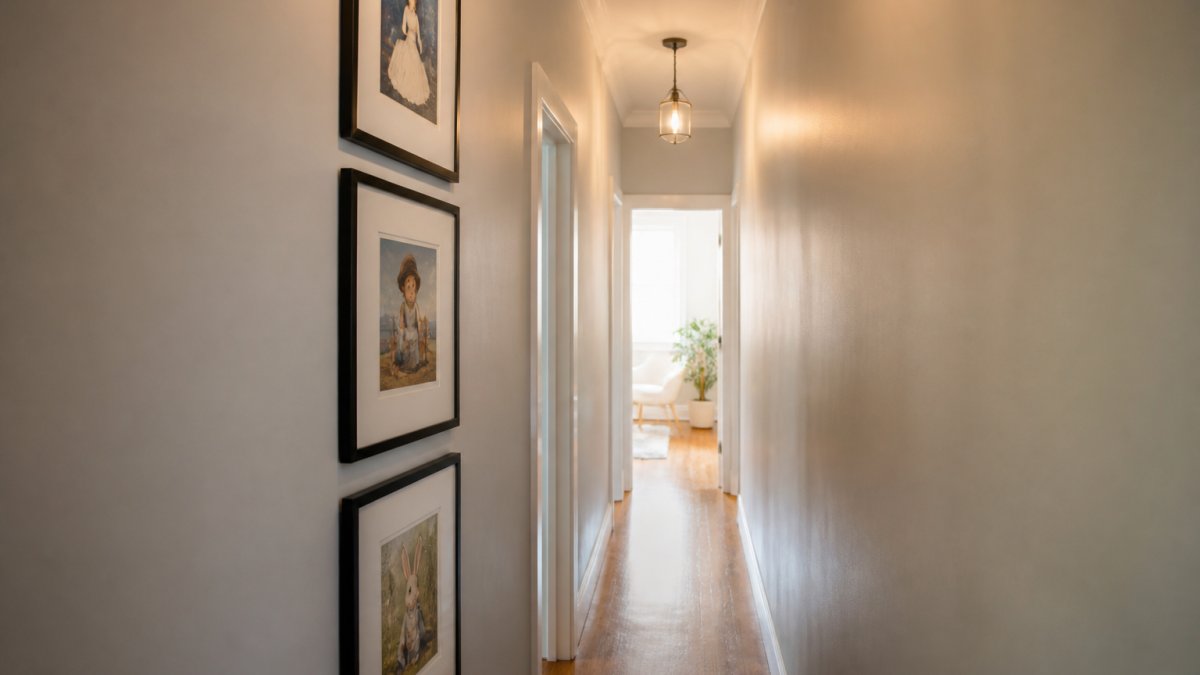
Mind Eracing Studio's character-inspired prints from classic tales work exceptionally well in narrow hallways because each piece tells a story. You don't need many pieces to create impact, a few carefully chosen prints can transform a hallway into a gallery experience.
Use one-wall display to avoid clutter
A one-wall display is the secret to making a narrow hallway feel spacious rather than cramped. By keeping one wall dedicated to art and leaving the opposite wall clear, you create visual balance.
This approach is particularly effective in hallways because it creates a clear focal point. Your eye travels down the hallway and lands on the art wall. The opposite wall provides visual rest.
A one-wall display also makes the hallway feel wider. When both walls are covered with art, the space feels boxed in. When one wall is clear, the hallway seems to expand.
Incorporate mirrors and lighting
Mirrors are powerful tools in narrow hallways. A mirror placed opposite your art wall reflects light and creates the illusion of depth. This makes the hallway feel wider and brighter.
Position mirrors strategically. A mirror at the end of a hallway draws the eye forward and extends the visual space. A mirror opposite a window bounces natural light throughout the hallway.
Lighting transforms how artwork appears. Install wall sconces or picture lights above your gallery wall. Soft, warm lighting highlights the artwork and creates ambiance.
Consider the finish of your artwork when planning lighting. Satin finishes reflect light differently than archival matte finishes.
Natural light is valuable in hallways with windows. Avoid placing artwork in direct sunlight for extended periods, as UV exposure can fade colors over time (Limiting Light Damage).
Lighting and Final Touches
Lighting is the finishing element that brings a hallway gallery to life. Proper lighting showcases your artwork and creates atmosphere.
Wall sconces flanking your gallery wall create focused illumination without overwhelming the space.
The color temperature of your lighting matters. Warm white light (around 2700K) creates a welcoming, intimate feeling.
Dimmers are invaluable in hallways. They allow you to adjust lighting intensity based on time of day and mood.
Consider the wall color as well.
A narrow hallway rug can anchor the space visually and add texture.
Arranging art in a narrow hallway requires thoughtful planning and strategic choices, but the results are worth the effort.
At Mind Eracing Studio, we understand that character-inspired art from classic tales brings warmth and personality to spaces that need it most.
Frequently Asked Questions
How high should you hang art in a hallway?
Hang artwork so the center sits at approximately 57-60 inches from the floor, which aligns with average eye level. This creates an immediate visual connection as people walk through. For gallery walls with multiple pieces, position the center of the entire grouping at this height. Adjust slightly if your household has notably taller or shorter members, but maintain consistency across the hallway to guide the eye smoothly down the space.
What's the correct spacing between pictures in a hallway gallery wall?
Space individual framed pieces 2-3 inches apart for a cohesive gallery wall. Measure from the outer edge of one frame to the outer edge of the next. For a more streamlined look in narrow hallways, keep spacing consistent and uniform. If you're creating a linear arrangement along one wall, equal spacing prevents visual clutter and makes the narrow space feel intentional rather than cramped. Use a level and painter's tape to mark positions before hanging.
Should you hang art on both sides of a narrow hallway?
No. Hanging art on both walls in a narrow hallway creates visual clutter and makes the space feel cramped. Instead, display artwork on one wall only, keeping the opposite wall calm and simple. This approach creates visual balance, prevents the hallway from feeling cluttered, and actually makes the narrow space feel wider by establishing a clear focal point. Character-inspired art from classic tales works especially well as a one-wall feature, drawing attention without overwhelming the tight space.
How do you arrange art to make a narrow hallway feel wider?
Use vertical arrangements to draw the eye upward, which creates an illusion of height and space. Keep artwork on one wall only and leave the opposite wall visually calm with light paint or minimal decor. Incorporate mirrors strategically to reflect light and create depth. Choose medium-sized prints rather than one large piece, and maintain consistent spacing to create visual rhythm. Proper lighting eliminates glare and highlights the artwork, making the hallway feel more open and intentional rather than cramped.