
Table of Contents
- Understanding UV Radiation and Pigment Degradation
- Selecting UV Protective Glass for Framing
- Identifying Light-Sensitive Materials in Your Collection
- Choosing the Best Location to Hang Art
- How to Prevent Art Fading Through Environmental Control
- Monitoring and Maintenance for Long-Term Preservation
- Archival Framing Techniques for Your Collection
- Frequently Asked Questions
Last Updated: October 3, 2026
Understanding UV Radiation and Pigment Degradation
Ultraviolet radiation breaks down chemical bonds in paint, ink, and dyes through photodegradation, causing pigments to fade faster with direct sunlight exposure.
Different materials fade at different rates: watercolors and pastels are most vulnerable, while oil paintings degrade more slowly. Canvas, paper, and varnish all suffer damage from UV and infrared radiation.
Fading is irreversible, once pigment breaks down, the original color cannot be restored. Prevention is your only option.
Light damage accumulates silently over months and years, with no warning signs until color shifts become obvious.
Selecting UV Protective Glass for Framing
UV protective glass blocks ultraviolet radiation while preserving visibility, the most important factor in protecting artwork from sunlight.
Museum-Grade Glazing Options
Museum-grade glazing blocks 99% of UV radiation and most infrared radiation, providing the best protection available.
UV-filtering acrylic is lighter and easier to install but scratches more easily than glass.
Regular framing glass offers almost no UV protection; the small cost difference between standard and UV-protective glass is worth the investment for valuable pieces.
When choosing glazing, prioritize UV blocking percentage (aim for 99%), infrared protection, glare reduction, and durability.
DIY vs. Professional Framing
DIY framing saves money but risks damage from acid-containing materials that many people use unknowingly.
Professional framers understand archival standards and have access to museum-grade glazing and acid-free supplies.
If framing yourself, use acid-free mat board, acid-free tape, and UV-protective glass; avoid cheap kits that contain damaging materials.
For valuable or sentimental pieces, professional framing is worth the cost; professionals prevent thermal expansion damage from temperature and humidity changes.
Identifying Light-Sensitive Materials in Your Collection
Not all artwork fades at the same rate. Understanding why different materials degrade differently helps you prioritize protection and set realistic preservation timelines.
Paper-Based Artwork: Watercolors, Pastels, and Drawings
Paper-based artwork is the most light-sensitive category because pigments and dyes lack the protective binder layers found in oil paintings.
Watercolor pigments fade noticeably within 5-10 years at 200+ lux; paper yellows and becomes brittle as lignin oxidizes. Pastels and charcoal suffer similar fading and humidity sensitivity.
Preservation threshold: Paper-based artwork should be displayed at or below 150 lux, with UV protection at 99%. Rotate these pieces into storage periodically if possible.
Photographs: Color vs. Black-and-White
Color photographs are extremely light-sensitive, fading unevenly within 3-7 years as reds and yellows fade first, shifting color balance toward blue or magenta.
Black-and-white photographs fade more slowly but still yellow over time. Instant film photographs are least stable, with dyes migrating rapidly in warm or humid conditions.
Digital color prints vary widely in longevity; pigment-based inks are more fade-resistant than dye-based inks.
Preservation threshold: Color photographs require 99% UV blocking and display at 150 lux or lower. Black-and-white prints tolerate slightly higher light levels (up to 200 lux) but still benefit from UV protection.
Oil Paintings and Varnish Layers
Oil paintings are more stable than works on paper because the oil binder resists fading, but varnish yellows and becomes brittle under UV exposure, darkening the painting.
Oil paint pigments fade slowly; synthetic organic pigments fade faster than earth or mineral pigments, showing noticeable color shift over 15-20 years of continuous exposure.
Canvas fibers weaken under UV radiation, and sizing yellows and becomes brittle.
Preservation threshold: Oil paintings tolerate 200-250 lux but benefit from 99% UV protection to preserve the varnish layer and slow pigment fading. Repainting or varnish replacement is expensive; prevention is far more cost-effective.
Textiles: Dyes and Fibers
Textile art fades noticeably and unevenly. Natural dyes (pre-1900) break down rapidly; synthetic dyes vary widely in light-fastness, fading within 5-20+ years depending on type.
Fibers weaken irreversibly under UV radiation: silk becomes brittle and yellows, wool develops harsh texture, limiting textile lifespan.
Preservation threshold: Textiles should be displayed at 150 lux or lower with 99% UV protection. Rotation into storage (every 1-2 years) significantly extends the lifespan of valuable textile pieces.
Prints and Lithographs
Prints vary in light-sensitivity by printing method and ink type. Oil-based lithographic inks are more stable than dye-based inks.
Modern giclée prints depend on ink type: pigment-based inks are more fade-resistant than dye-based, and acid-free paper preserves prints longer.
Preservation threshold: Prints should be displayed at 150-200 lux with 99% UV protection. Verify the ink type and paper quality when framing; this determines how aggressively you need to protect the piece.
Identifying Your Artwork's Sensitivity: A Practical Checklist
Identify materials by appearance: matte surface with visible brushstrokes = watercolor (very light-sensitive); chalky texture = pastel (very light-sensitive); glossy surface = oil painting (moderate); smooth uniform = print/photograph; woven = textile (very light-sensitive).
When unsure, ask a professional framer or conservator to identify the medium and recommend preservation strategies.
Choosing the Best Location to Hang Art
Where you hang artwork matters as much as how you frame it. Learning how to preserve original artwork from sunlight through proper placement keeps your piece safe from light damage for years.
Distance from Windows and Light Sources
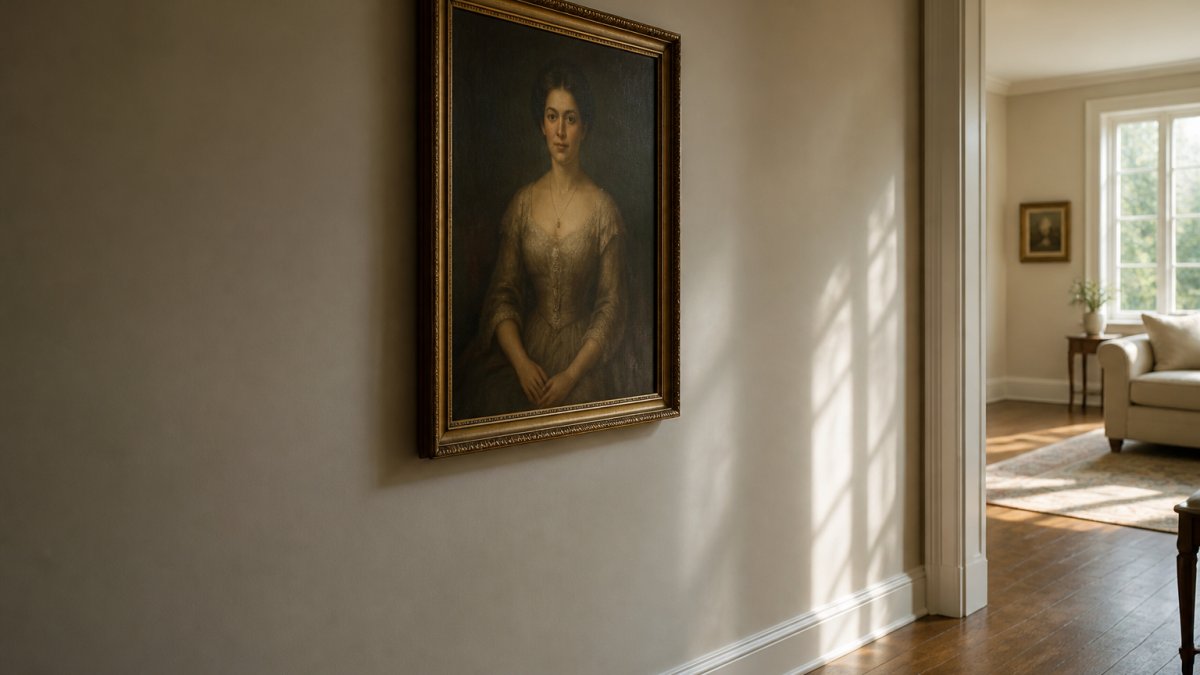
Hang artwork at least six feet from windows; direct sunlight is the worst threat, and UV radiation passes through glass even on cloudy days.
North-facing walls are safest with indirect light; avoid south and west-facing walls that receive intense afternoon sunlight.
Interior walls away from windows are ideal, providing stable, consistent lighting.
Avoid hallways near exterior doors, basements, and bathrooms due to light fluctuations and humidity.
Controlling Ambient Light and Lux Levels
Lux measures light intensity; most artwork should display at 150-200 lux, lower for light-sensitive pieces.
Use this simple test: if you can read comfortably where your artwork hangs, the light is too high. Dim until reading becomes difficult.
Use warm incandescent lights positioned away from artwork; avoid spotlights, as they emit more UV than LEDs.
Install window treatments: curtains block direct sunlight, sheer curtains filter light, blinds allow adjustment, blackout shades provide maximum protection.
How to Prevent Art Fading Through Environmental Control
Light is only one factor in artwork preservation. Temperature and humidity also cause damage. Controlling your display environment protects artwork from multiple threats.
Managing Humidity and Temperature
Stable conditions prevent warping, cracking, and mold: aim for 45-55% relative humidity and 65-75°F.
Fluctuating humidity causes the most damage: wood frames expand and contract, canvas stretches and shrinks, paper becomes brittle.
Avoid kitchens, bathrooms, and basements due to steam, moisture, and mold risk.
Keep artwork away from heating vents, AC units, and fireplaces that create temperature stress.
Use a humidifier (dry climates) or dehumidifier (humid climates) and monitor with an inexpensive hygrometer.
Using Window Treatments and Protective Coatings
UV-filtering window film blocks UV radiation while maintaining visibility and reduces fading without darkening the room.
Apply window film only to windows near valuable artwork that receive direct light.
Protective coatings offer additional defense: varnish for oil paintings, acrylic spray for some prints. Consult a conservator before applying to valuable pieces.
Heavy curtains block nearly all UV radiation; sheer curtains offer a compromise, filtering light while maintaining visibility.
Monitoring and Maintenance for Long-Term Preservation
Regular inspection catches problems early; you don't need expensive equipment to monitor conditions effectively.
Spotting Signs of Sun Damage
Check artwork every three months for: uneven fading (directional light), color shifts (pigment breakdown), yellowing (UV damage), cracks/peeling (humidity/temperature), condensation (humidity control issue), or mold (excessive humidity).
Photograph each artwork when first hung and again every 6-12 months using consistent lighting and angle; compare images to reveal color shifts your eye misses.
If fading appears, move the artwork immediately and increase UV protection to prevent further damage.
Measuring Light Levels: Lux and Practical Tools
Practical ways to assess light levels:
The reading test: If you can read comfortably, light is too high (300+ lux). Dim until reading becomes difficult.
Smartphone light-meter apps: Apps like "Light Meter" estimate lux using your phone's camera. Measure multiple times daily to understand light variation; 150-200 lux is ideal, above 300 lux is too much.
Affordable digital light meters: Handheld lux meters ($15-$40) provide accurate readings. Measure morning, afternoon, and evening to understand daily patterns.
Window-by-window assessment: Measure light at different distances to identify safe display areas. North-facing windows produce 100-150 lux; south and west-facing exceed 500 lux during peak hours.
Temperature and Humidity Monitoring
Monitor with inexpensive tools: A basic hygrometer/thermometer combo ($10-$20) placed near artwork reveals patterns, humidity spikes, damp basements, temperature fluctuations, showing which locations need environmental control.
Keep a simple log of date, temperature, humidity, and location. Over three months, seasonal patterns reveal whether you need a humidifier, dehumidifier, or relocation.
Avoid problem areas: Kitchens, bathrooms, basements, and attics fluctuate or stay damp. Interior walls away from vents, AC, and fireplaces are ideal.
Creating a Preservation Documentation System
Document your collection systematically to track changes and prove condition for insurance claims.
Record for each artwork: title, artist, medium, age, location, light level, frame type, inspection date, visible damage, and framing date.
Store in a spreadsheet with dated photos; update every 6-12 months.
This documentation proves condition for insurance claims and identifies pieces fading fastest, signaling when to increase protection or rotate into storage.
Rotation and Storage Strategy
Rotate artwork every 1-2 years to distribute light exposure evenly, especially for light-sensitive media like watercolors, photographs, and textiles.
For storage: use acid-free boxes and tissue, maintain 45-55% RH and 65-75°F, store in dark locations, avoid plastic (traps moisture), check every 6 months for mold or pests.
Rotation extends lifespan by limiting cumulative exposure: a watercolor displayed 5 years, stored 5 years, then displayed again shows far less fading than continuous 10-year display.
Archival Framing Techniques for Your Collection
Proper framing is the foundation of preservation.
Acid-free materials are essential. Acid causes paper to yellow and become brittle.
Never use regular cardboard or kraft paper as backing. These contain acid and lignin.
Mount artwork using reversible methods. Archival hinges hold artwork in place without permanent adhesive.
Glass or acrylic should not touch the artwork. Leave a small gap between the glazing and the piece.
Frame backing should allow air circulation. Sealed backs trap moisture and promote mold growth.
Understanding how to preserve original artwork from sunlight requires a combination of strategies.
Frequently Asked Questions
Does indirect sunlight fade artwork?
Yes, indirect sunlight can cause fading over time, though more slowly than direct exposure. Ultraviolet radiation penetrates windows and reflects off surfaces, gradually degrading pigments and varnish through photodegradation. Even north-facing windows allow some UV light to reach your art. The key is controlling total light exposure: keep artwork away from windows entirely, use UV-filtering acrylic or museum-grade glazing, and monitor lux levels to stay below 150-200 lux for sensitive pieces.
What kind of glass protects art from UV rays?
Museum-grade glazing and UV-filtering acrylic are the gold standards for preservation. Museum-grade glass blocks 97-99% of UV radiation while maintaining color accuracy, though it costs more and is heavier. UV-filtering acrylic blocks 95-98% of UV rays, weighs less, and won't shatter, making it practical for most collectors. Avoid standard glass and regular acrylic, they offer little to no UV protection. For archival framing, pair your glazing choice with acid-free mounting materials to prevent deterioration.
How far should artwork be from a window?
Position artwork at least 6-8 feet away from windows when possible, and never in direct sunlight. Even at this distance, indirect light and reflected UV radiation can accumulate over months and years. If window placement is unavoidable, use heavy window treatments like UV-blocking curtains or shades to filter spectral output. North-facing walls are safest since they receive minimal direct sunlight throughout the day. Test your display environment with a light meter to ensure ambient light stays below recommended preservation levels.
How do I know if my art is fading from the sun?
Signs of sun damage include uneven color loss (fading on one side of the artwork), discoloration of the varnish or protective coating, and visible yellowing or browning of canvas or paper. Compare the back of the frame or an unexposed area to the front, if colors are noticeably brighter behind the frame, sun damage is occurring. Archival matte prints and canvas pieces show fading more gradually than glossy finishes. Start preventative maintenance immediately if you notice these signs; digital monitoring tools or regular photography can help track changes over time.