
Table of Contents
- Why Book Lovers Are Ditching Traditional Frames
- How to Hang Posters Without Frames: 5 Methods That Work
- Magnetic Poster Hangers: The Zero-Damage Option
- Gallery Wall Layout Ideas for Unframed Bookish Art
- DIY Alternatives to Framing: Pins, Pegs, and Shelves
- Space-Saving Display Solutions for Small Rooms
- Protecting Unframed Prints: Paper, Light, and Humidity
- Conclusion: Match the Method to the Print
- Frequently Asked Questions
Last Updated: September 10, 2026
Why Book Lovers Are Ditching Traditional Frames
The biggest shift in bookish decor right now isn't a new artist or a new aesthetic. It's the frame itself. Readers who once budgeted for custom framing are increasingly skipping it, because alternatives to framed posters for book lovers deliver the same storytelling impact for a fraction of the cost and hassle.
A frame adds weight, cost, and a trip to the hardware store. An unframed print adds flexibility. You can swap art with the seasons, move it between rooms, and hang it in a rental without leaving a single nail hole.
Here's the throughline for this guide: the print is the artwork, and the hanging method is just a delivery system. Get the method right and the art does the rest. Below, we break down five hanging methods, layout ideas, protection basics, and where to spend your money.
How to Hang Posters Without Frames: 5 Methods That Work
Hanging a poster without a frame comes down to one of five methods: wooden dowel and cord, binder or bull clips, a clip rail, magnetic poster hangers, or simple pins and pegs. Each suits a different print size, wall type, and budget.
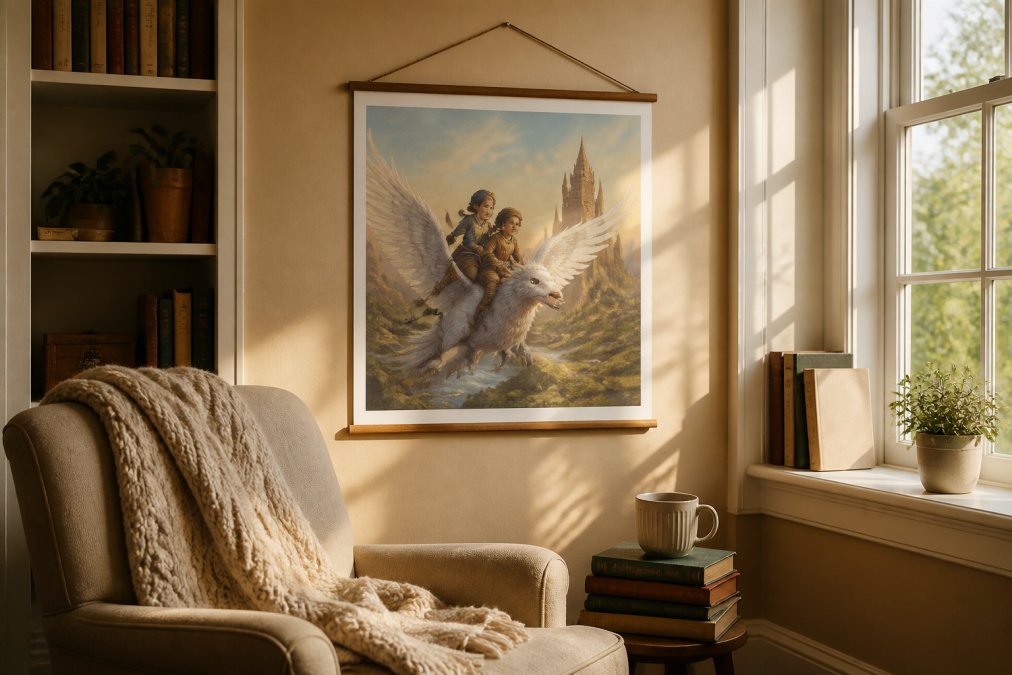
Wooden Dowel and Dowel-and-Cord Hanging
A wooden dowel threaded through a top hem, suspended by cord or twine, gives an unframed print a finished, gallery-adjacent look. It suits larger storybook prints and rustic or minimalist interiors. The trade-off: you need a hem or clips to hold the paper, and heavier stock can bow in the middle over time.

Binder Clips, Bull Clips, and Clip Rails
Binder clips and bull clips are the fastest option and cost almost nothing. A clip rail, a horizontal bar with sliding clips, handles multiple prints in a row and keeps them aligned. This is the best setup for a rotating display, since you can swap prints without rehanging hardware.
Magnetic Poster Hangers: The Zero-Damage Option
Magnetic poster hangers are two wooden or metal bars that clamp the top and bottom edges of a print with magnets, requiring no adhesive, no pins, and no holes. For renters and anyone displaying vintage book pages or thin paper, they're the cleanest choice on the market.
Sizing and Weight Limits to Check Before You Buy
Match the hanger width to your print width, not the other way around. A hanger narrower than the paper will crimp the edges. Check the weight rating too: most magnetic hangers are built for lightweight paper, and a heavy 230 gsm archival matte print may need a sturdier bar or a dowel instead.
Gallery Wall Layout Ideas for Unframed Bookish Art
The most reliable gallery wall layout for unframed bookish art is a grid of same-size prints, because it creates order without frames to define the edges. From there, you can loosen the structure as your confidence grows.
Three layouts that work well for literary-inspired prints:
- The strict grid: six same-size prints in two rows of three, aligned to a center line
- The salon wall: mixed sizes clustered around one anchor piece, filled outward
- The shelf lean: prints resting on a picture ledge in overlapping layers
For a curated look, group by theme rather than by color. A wall of Alice prints, or a wall of fable characters, reads as intentional. A wall of random prints in matching colors reads as a clearance sale.

DIY Alternatives to Framing: Pins, Pegs, and Shelves
Most buying guides stop at the product page. The real advantage of going frameless is that you can build the display yourself with hardware-store parts and a few minutes of work. Here are four DIY methods, ranked by how much effort they actually take.
Washi tape corners. The lowest-commitment option: run a strip of washi tape along the top edge of a print and press it to the wall, or use four short strips at the corners to mimic a mat. Washi peels off painted drywall and most wallpaper without lifting the finish, which makes it the safest choice for renters. The trade-off is holding power, washi works for lightweight paper up to roughly 100 gsm, but a 230 gsm archival matte print will pull the tape loose within days. Use it for vintage book pages, not heavy stock.
Binder clips on a nail or hook. A single small nail plus a medium binder clip holds a print by its top edge and lets you swap art in seconds. Two clips spaced a few inches apart keep wider prints from curling. This is the cheapest method on this list and the easiest to reposition, but the clip leaves a small indentation on the paper's top edge over time, so rotate prints rather than leaving one clipped for months.
Wooden pegs and a length of twine. Screw two small wooden pegs into the wall, run twine between them, and clip prints to the twine with mini clothespins. This reads as intentional, rustic, and bookish, especially for a wall of vintage book-page prints. Pegs need anchors in drywall if you plan to hang more than two or three prints, and the twine will sag under weight, so keep the run under about 4 feet.
Picture ledges. A picture ledge is the standout DIY-adjacent option: it holds prints upright, lets you layer several, and typically mounts with two screws into studs or drywall anchors. Standard ledges run 24 to 48 inches wide and hold prints up to about 24 inches tall. The advantage most guides miss is rotation. You can pull a print forward, tuck a new one behind, and change the whole wall in thirty seconds, no rehanging, no new holes. For collectors who buy faster than they hang, that matters more than any frame.
A quick cost reality check: a single custom frame for an 18x24 print commonly runs well over $100 at a framing shop, while a picture ledge, a pack of binder clips, or a roll of washi tape each cost a fraction of that. The DIY route is not just aesthetic, it is the difference between displaying one print and displaying ten.
Space-Saving Display Solutions for Small Rooms
Small rooms need vertical thinking, and they need methods that do not cost you a security deposit. A narrow strip of wall beside a door, above a desk, or along a hallway can hold a column of three or four prints on a single clip rail, using less than 12 inches of width. The key is to treat the wall as a vertical column rather than a horizontal gallery.
Renter-safe methods first. If you cannot put holes in the wall, your realistic options are magnetic poster hangers, adhesive strips rated for the print's weight, and washi tape. Magnetic hangers clamp top and bottom edges with no adhesive at all and work on any wall surface. Adhesive strips hold more weight but can pull paint if removed carelessly, follow the package removal instructions and pull straight down, slowly. Washi tape is the lightest-duty option and best reserved for thin paper.
Closet and door interiors. The inside of a closet door is free wall space that no one else sees, which makes it ideal for a private display or a rotating queue of prints you have not hung yet. A magnetic hanger or a strip of adhesive hooks works here without affecting the room's look. The same logic applies to the back of a bedroom door.
Bookshelf sides and tops. A magnetic hanger on the side of a bookshelf turns an unused vertical surface into display space. Leaning prints against the wall on top of a bookcase is even simpler and lets you rotate them monthly. Keep the lean angle shallow, past about 15 degrees, paper starts to bow.
Above doorways. The wall above a doorway is almost always empty and almost always wide enough for a single horizontal print or a short clip rail. This is the highest-yield unused space in a small apartment, and it keeps art out of the way of furniture and traffic.
A single column layout. Instead of a grid, stack three same-width prints vertically on one clip rail or with individual magnetic hangers. A column uses roughly the width of one print and can run from desk height to near the ceiling, which makes a small room feel taller rather than more crowded.
Styling the small-space wall. Group by theme rather than by color. A column of three Alice prints or a row of fable characters reads as intentional; a mix of random prints in matching colors reads as a clearance sale. Keep spacing consistent, 2 to 3 inches between prints in a column, and align the top edges if you are mixing sizes. The goal is a single visual line the eye can follow, which is what makes a small wall feel curated instead of cluttered.
Protecting Unframed Prints: Paper, Light, and Humidity
Unframed prints need three things to last: archival paper, indirect light, and stable humidity. Archival matte stock resists yellowing far better than standard copy paper, and keeping prints out of direct sun prevents the fading that ruins color within a single summer.
Satin and archival matte finishes behave differently here. Satin's subtle sheen shows fingerprints and glare near windows; archival matte absorbs light and hides handling marks, which makes it the better pick for high-traffic walls. The Library of Congress preservation guidance recommends keeping paper away from direct sunlight and fluctuating humidity, advice that applies to any print you want to keep for years.
For material sourcing, look for printers that state their paper weight and fiber content openly. The Environmental Protection Agency's guidance on recycled content is a useful reference if sustainability factors into your buying decisions.
| Method | Best For | Wall Damage | Cost Level |
|---|---|---|---|
| Wooden dowel and cord | Large storybook prints | Low | Low |
| Binder/bull clips | Quick rotation | Low | Very low |
| Clip rail | Multiple prints in a row | Low | Low |
| Magnetic hanger | Renters, thin paper | None | Medium |
| Pins and pegs | Casual, lightweight prints | Moderate | Very low |
Conclusion: Match the Method to the Print
The wrong method ruins a good print faster than anything else. A heavy archival matte poster on flimsy clips will sag. A delicate vintage book page on a dowel will tear. Match the hanging method to the paper weight, the wall type, and how often you plan to change the display.
Mind Eracing Studio prints on satin and archival matte stock, with a range of sizes across horizontal, vertical, and square formats. That range means you can build a grid, a salon wall, or a single statement piece without hunting for odd dimensions. Start with one print, one hanger, and one wall, then let the collection grow.
Frequently Asked Questions
What are some alternatives to framing a poster?
The most popular options are magnetic poster hangers, wooden dowel-and-cord sets, binder clips on a rail, washi tape, and simply resting a print on a picture ledge or bookshelf. Each method skips glass and a frame shop visit, so you can rotate art whenever the mood strikes. Magnetic hangers and dowel sets work best for larger prints, while clips and tape suit small, lightweight pieces. For a book lover's reading nook, a dowel hanger paired with a storybook illustration gives the relaxed, page-like look that frames often hide.
How do I use magnetic poster hangers without damaging my print?
Magnetic poster hangers grip the top and bottom edges of a print between two wooden or metal bars, so no adhesive ever touches the paper. Choose a hanger width that matches your print size, then sandwich the top edge between the magnets and hang the cord on a nail or hook. For heavier archival matte prints, check the hanger's weight rating before buying. Remove the print by gently pulling the magnets apart. Keep the bars away from moisture and dust the wood with a dry cloth.
How can I display art prints without using traditional frames?
Try a picture ledge, a clip rail, a wire-and-clip grid, or a simple dowel hanger. Picture ledges let you layer several prints and swap them seasonally, which suits collectors who rotate bookish art often. Clip rails hold multiple prints in a row and work well above a desk or reading chair. For a renter-friendly option, magnetic hangers need only one small nail or adhesive hook. Whichever method you pick, keep prints out of direct sunlight and away from humid rooms like bathrooms to slow fading and waviness.
How do I protect unframed art prints from damage?
Unframed prints are exposed to dust, light, and humidity, so a few habits go a long way. Hang them away from direct sun and heat vents, since UV light fades inks over time. Dust gently with a clean, dry cloth rather than a damp one. If you live in a humid climate, avoid kitchens and bathrooms. For long-term storage, place prints flat between two sheets of acid-free paper or inside a portfolio. Archival matte papers on heavier stock hold up better to handling than thin poster paper.
Choosing how to display bookish art is really a question of how much you want to fuss. The simplest methods, a magnetic hanger or a clip rail, keep the focus on the artwork instead of the hardware. Mind Eracing Studio offers character-inspired posters drawn from classic tales and fables, available in satin and archival matte finishes with sizes to fit small nooks and full gallery walls. Get started with Mind Eracing Studio and build a wall that tells your story.