
Table of Contents
- Where to Buy High Quality Character Art: A Buyer's Guide
- Quick Comparison: Character Art Sources and Pricing
- Custom Character Art Commissions from Independent Artists
- Digital Portraits and Fantasy Stock Art Marketplaces
- How to Choose Art Prints for Home Decor: What Matters
- Best Whimsical Art Prints for 2026: Character-Driven Collections
- Vetting Artist Portfolios and Avoiding Low-Quality Reproductions
- Commercial vs. Personal Use Licensing: What You Need to Know
Last Updated: August 18, 2026
Where to Buy High Quality Character Art: A Buyer's Guide
Finding high quality character art means knowing which source delivers artistic integrity, print quality, and genuine value. The market has expanded significantly, offering everything from custom commissions to curated print collections, but availability isn't the challenge, knowing what separates craftsmanship from mediocre reproductions is.
At Mind Eracing Studio, we offer a curated collection of artistic posters and prints, bringing storytelling to life through unique, character-inspired designs drawn from classic tales and fables. This guide walks you through the major ways to buy high quality character art, from independent artist commissions to premium print marketplaces.
Quick Comparison: Character Art Sources and Pricing
| Source Type | Price Range | Best For | Key Consideration |
|---|---|---|---|
| Custom artist commissions | $200-$2,000+ | Unique, personalized designs | Long turnaround (4-12 weeks) |
| Independent artist prints | $15-$50 | Character-driven, limited editions | Smaller selection |
| Premium stock art marketplaces | $20-$100+ | Fantasy, sci-fi, anime styles | Licensing restrictions vary |
| Mind Eracing Studio character prints | $16.27 | Curated, character-inspired designs | Satin or archival matte finishes |
| Mass-market art retailers | $10-$40 | Budget-friendly options | Lower print quality |
Custom Character Art Commissions from Independent Artists
Custom character commissions are the gold standard for truly original work. You're paying an artist directly to create a one-of-a-kind piece tailored to your vision, whether that's an original character, fan art interpretation, or portrait in a specific style.
Finding reliable artists requires vetting portfolios carefully. Look for artists whose previous work demonstrates the style you want: anime character design, dark fantasy illustration, concept art, or surreal portraiture. Check turnaround time (typically 4-12 weeks), revision policy, and file formats delivered. Pricing ranges from $200-$500 for simple digital portraits to $1,000-$2,000+ for complex full-body character sheets.
Payment terms vary: some artists require upfront deposits, others invoice in stages. Ask about commercial use licensing if you plan to print and sell the work. Provide a detailed creative brief with reference images and color preferences. A good artist will sketch concepts for approval before final work.
Digital Portraits and Fantasy Stock Art Marketplaces
Stock art marketplaces offer a middle ground between mass-market prints and custom commissions. These platforms host thousands of digital portraits, fantasy illustrations, and character designs. You buy a license to use the art for personal display or commercial projects and can print it yourself or order prints through their services.
The advantage is speed and variety. The catch is licensing complexity. Royalty-free doesn't always mean you can print and sell commercially. Personal use licenses are cheaper but restrict you to home display. Commercial licenses cost more but allow printing and resale. Always read the fine print before purchasing.
Quality varies significantly by artist and platform. Some sites curate heavily; others accept nearly everything. Browse artist portfolios and read customer reviews before buying. High-resolution files matter if printing large, a 300 DPI file at 18x24 inches looks crisp; low-res looks pixelated.
How to Choose Art Prints for Home Decor: What Matters
Selecting character art prints requires thinking beyond aesthetics. Print quality, finish, framing, and how the piece integrates with your decor all affect the final result.
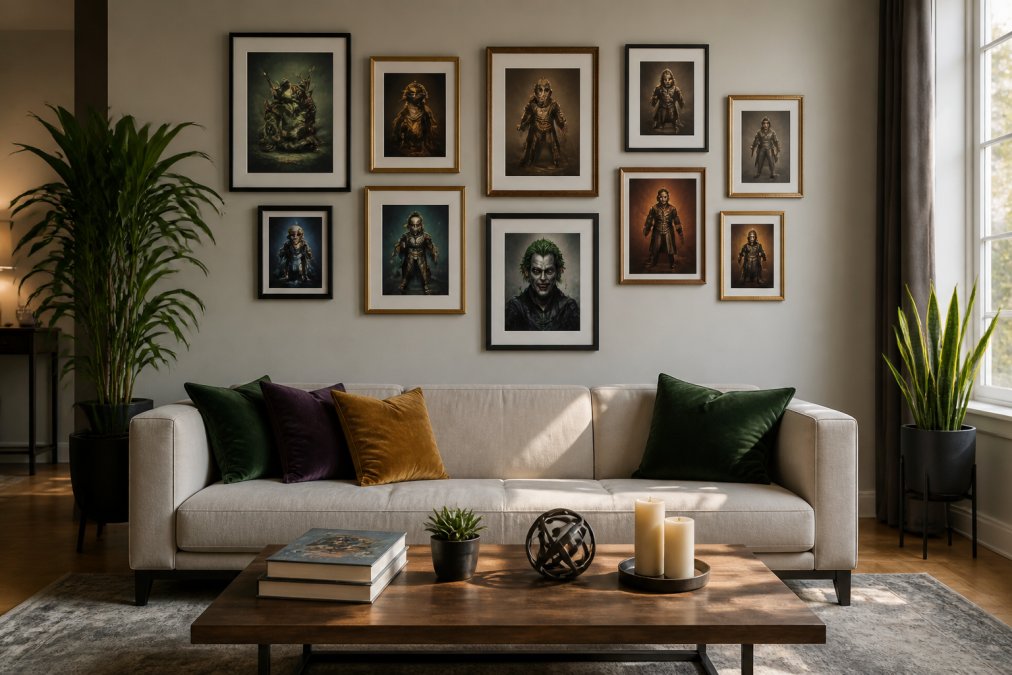
Start with size and placement. A single statement piece above a sofa or bed should be substantial, 18x24 inches or larger. Multiple smaller prints work better in gallery walls. Measure your wall space before ordering; oversized prints overwhelm, undersized ones disappear.
Consider artistic style and existing aesthetic. Character-driven art from classic tales and fantasy portraits works better in layered, eclectic decor than minimalist spaces. A single bold character print can anchor a modern apartment if the composition is strong and color palette complements furnishings. Jewel tones, deep purples, and rich reds create drama; softer palettes integrate subtly.
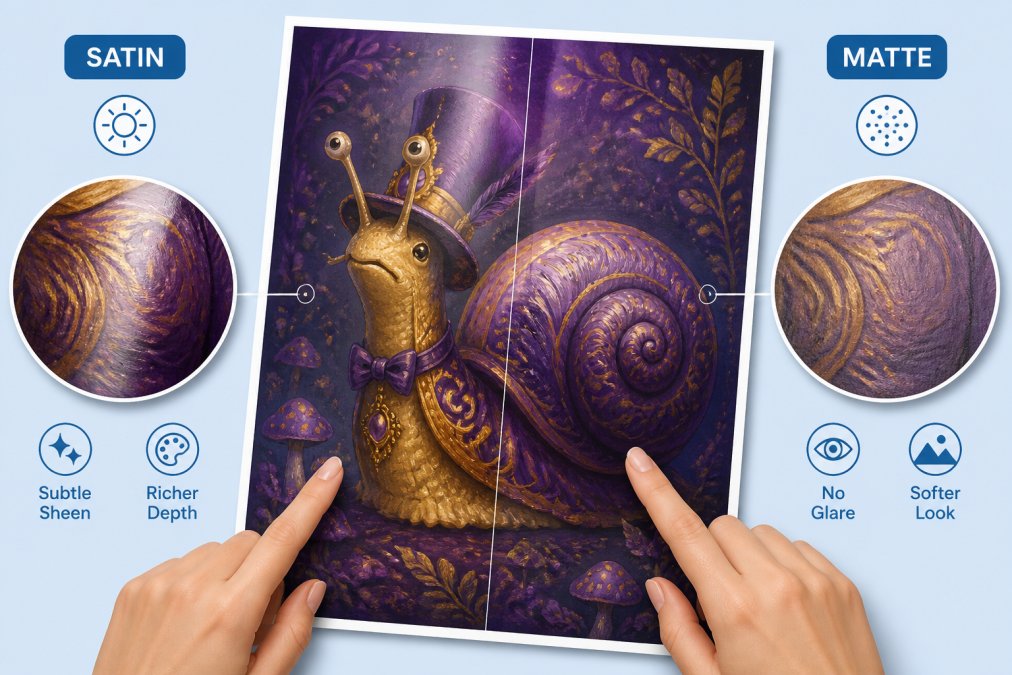
Paper finish changes how a print reads. Satin finishes have subtle sheen that makes colors pop and catches light. Archival matte finishes have museum-quality appearance that absorbs light and emphasizes texture without glare. Satin works well in living rooms; matte suits galleries and reading nooks.
Framing elevates character art from poster to gallery piece. A simple black or natural wood frame works with most styles. Matting adds depth and protects the art from touching glass.
Best Whimsical Art Prints for 2026: Character-Driven Collections
The best whimsical art prints for 2026 lean into character-driven storytelling and painterly quality. These are curated pieces with personality, depth, and artistic intention.
Mind Eracing Studio's collection exemplifies this trend. Each print brings theatrical, surreal energy through bold character portraits rendered in deep jewel tones, luminous golds, and saturated reds. The Raptor Cardinal Portrait Poster ($16.27) showcases a striking character-driven portrait with rich purples and deep reds, available in satin for luminous sheen or archival matte for museum-like finish. The heavyweight paper (210 gsm satin, 230 gsm matte) and USA printing ensure durability and color fidelity.

Other standouts include the Tarnaa ($16.27), which brings bold, mythic scenes with painterly brushstrokes, and the Dragon Portrait Poster ($16.27) offering moody, otherworldly presence in deep blues and greens. For darker, theatrical characters, the Medusa Horror Art Poster ($16.27) features striking portraiture with writhing serpents against deep blue.


The consistent thread is quality: high-fidelity color reproduction, heavyweight paper stocks, and finish options that control how art interacts with your space.
Satin vs. Archival Matte: Print Finish Explained
Satin finishes (210 gsm paper) have subtle, luminous sheen that reflects light gently. Colors appear vibrant and saturated. Jewel tones and highlights pop, creating visual depth. Satin works well in living rooms and creative studios. The tradeoff: satin shows fingerprints and dust more visibly, and bright overhead lights create subtle glare.
Archival matte finishes (230 gsm paper) have velvety, non-reflective surface that absorbs light. Heavier paper weight provides superior durability and longevity. Matte emphasizes brushwork and texture, giving museum-quality appearance. Colors appear slightly softer and more nuanced. Matte suits gallery walls and reading nooks where you want to minimize glare. The drawback: colors lack the same luminous quality as satin.
For character art with rich, saturated colors and fantasy portraits, satin often enhances the intended mood. For pieces emphasizing artistic technique and texture, matte is superior.
Vetting Artist Portfolios and Avoiding Low-Quality Reproductions
Not all character art sold online is created equal. Mass-market retailers flood the market with low-quality reproductions that fade quickly and use thin paper. Vetting artist portfolios and understanding production methods separates genuine craftsmanship from inflated pricing.
When evaluating an independent artist's work, examine their portfolio closely for consistency in style and attention to detail. Check previous commissions and client testimonials. If work is displayed in galleries or featured in publications, that's a credibility signal.
Ask about production process. Are they printing in-house or using third-party printers? Do they use professional-grade inks and paper? How do they ensure color accuracy between digital files and printed output? Reputable artists answer these questions specifically. Vague responses suggest they don't control the process.
Pricing is a clue. Suspiciously cheap custom commissions (under $100) suggest corner-cutting or undisclosed AI generation. Conversely, extremely high prices don't guarantee quality; some artists overprice based on hype.
For print-on-demand and marketplace options, read customer reviews carefully. Look for mentions of print quality, color accuracy, paper thickness, and whether final products matched expectations. Photos from actual customers are more reliable than stock images.
Commercial vs. Personal Use Licensing: What You Need to Know
Understanding licensing is critical before buying character art, especially if you plan to do anything beyond hanging it on your personal wall.
Personal use licensing is most restrictive and cheapest. You can display art in your home, frame it, and gift it to friends. You cannot print it on merchandise, use it in commercial business, publish it online, or sell copies.
Commercial licensing costs more but grants broader rights. You can use art in business settings, print it on merchandise for resale, feature it on websites, or use it in marketing materials. Specific rights vary by license.
Royalty-free means you don't owe ongoing royalties after purchase, but royalty-free licenses still have restrictions, often limited to personal use unless you pay for commercial licensing.
For custom commissions, negotiate licensing upfront. Personal use rights are standard for personal enjoyment. Commercial use typically costs 2-3x more.
When buying from established retailers like Mind Eracing Studio, licensing terms are clear: prints are sold for personal use and home display. Contact the retailer directly to discuss commercial rights options.
Finding Reliable Artists on Freelance Marketplaces
Freelance artist marketplaces connect you directly with creators offering custom character art. Start by narrowing your search to artists whose portfolio matches your vision. Filter by style and look at completed projects. Read client reviews, paying attention to communication, revision handling, and whether final products matched expectations.
Message potential artists before committing. Describe your vision in detail and ask clarifying questions about revisions, turnaround time, file formats, and payment terms. Professional artists respond promptly and clearly.
Pricing varies dramatically, from $50 for simple sketches to $2,000+ for complex work. Cheaper doesn't always mean lower quality, but it often reflects less experience. More expensive artists typically have stronger portfolios and longer waits.
Affordable Art Reproductions and Print-on-Demand Services
Print-on-demand (POD) services let artists sell prints without maintaining inventory. You order directly from the artist's online store, and the service prints and ships the piece. This model has democratized art sales, making it possible for independent artists to reach collectors without upfront printing costs.
The advantage is selection and affordability. POD platforms host millions of designs, and competition keeps prices low. Turnaround is fast, typically 5-10 business days.
The risk is inconsistent quality. Some POD services use excellent inks and paper; others cut corners. Color accuracy varies depending on printer calibration. Paper weight and finish options are limited compared to specialty printers. Order a sample first before buying larger pieces.
Many independent artists use POD services as their primary sales channel. Some partner with high-quality POD providers and maintain strict standards; others use cheap services to maximize margins. Check customer reviews and ask which POD service the artist uses.
Mind Eracing Studio's prints are produced using modern printing techniques on heavyweight paper stocks (210-230 gsm) and assembled in the USA.
Where to Buy High Quality Character Art: Final Recommendations
The best source depends on your priorities. For truly original, personalized work with a 4-12 week wait, commission from an independent artist with a strong portfolio. For curated, character-driven designs with guaranteed quality at accessible prices, explore specialty retailers like Mind Eracing Studio that control production. For fast delivery and browsing inspiration, stock art marketplaces and POD services work well, just vet the artist and read reviews.
Avoid mass-market retailers that treat art as generic commodity. A $16.27 print from a curator who controls production quality outperforms a $10 poster from a retailer that dropships cheaply.
When evaluating any source, ask three questions: Can I see the artist's full portfolio? What's the production process and paper quality? What do customer reviews actually say?
Finding high quality character art means valuing the artist's vision and printing craft. Mind Eracing Studio's curated collection of character-inspired designs, from the Raptor Cardinal Portrait Poster to the Dragon Portrait Poster, demonstrates that you don't need to choose between affordability and quality. Each print is produced on heavyweight paper in satin or archival matte finishes, assembled in the USA, and priced accessibly. Add a print to your collection and transform your space with storytelling art that lasts.
Frequently Asked Questions
What is the difference between character art prints and custom commissions?
Character art prints are pre-created designs available for purchase in standard sizes and formats, like the fantasy and mythology posters from Mind Eracing Studio starting at $16.27. Custom commissions are original artworks created specifically for you by an artist based on your creative brief, taking weeks to months and costing significantly more. Prints offer immediate ownership and lower cost; commissions offer exclusivity and personalization tailored to your exact vision.
How do I verify the quality of character art before purchasing?
Check the artist's portfolio for consistency in technique, color accuracy, and detail work. Review customer photos of printed pieces, colors often differ from screen displays. Ask about paper weight (look for 210+ gsm), printing method, and archival rating. Reputable sellers like Mind Eracing Studio specify materials: heavyweight satin (210 gsm) and archival matte (230 gsm) papers printed in the USA indicate quality control. Request samples or check return policies before committing to larger orders.
What should I look for in archival matte versus satin print finishes?
Archival matte (230 gsm) offers a museum-quality, glare-free finish that emphasizes brushwork texture and subtle color depth, ideal for detailed character art. Satin (210 gsm) delivers a subtle sheen that makes colors pop and adds luminous highlights, working well for bold, vibrant designs. Matte suits reading nooks and studios; satin works in living rooms where you want visual impact. Both preserve color for decades when printed on archival-rated paper.
Is it legal to use purchased character art for commercial projects?
No, unless the license explicitly grants commercial rights. Most art prints sold for home decor carry personal use licenses only, you can display them at home but cannot use them in business materials, merchandise, or publications without a separate commercial license. Always check the seller's terms before purchase. Custom commissions should have a written agreement specifying whether commercial use is included. If you need commercial rights, negotiate that upfront or purchase stock art with commercial licenses.
How can I support independent character artists online?
Buy directly from artist websites or curated studios like Mind Eracing Studio that work with independent creators. Commission original work rather than purchasing prints. Leave detailed reviews and share artist work on social media. Attend virtual gallery openings or artist showcases. Ask artists about their process and materials, this signals you value their craft. Avoid mass-market platforms that undercut artist pricing. Pay fair rates for custom work and respect revision policies, which protect artists' time and expertise.
This article was written using GrandRanker