
Table of Contents
- Character-Inspired Art Posters as Statement Walls
- Minimalist Bookshelf Styling for Clean, Curated Displays
- Reading Nook Design Ideas for Small Spaces
- Best Lighting for Reading Nooks and Book Displays
- Floating and Wall-Mounted Shelving Solutions
- Repurposing and Styling Books as Decorative Objects
- Budget-Friendly DIY Projects for Literary Spaces
- Conclusion
Last Updated: August 16, 2026
Character-Inspired Art Posters as Statement Walls
Character-inspired art posters transform blank walls into storytelling focal points, turning your home into a curated gallery that reflects your literary passions. A single striking piece can define a room's personality, particularly in modern minimalist interiors.
Mind Eracing Studio offers a curated collection of artistic posters and prints, bringing storytelling to life through unique, character-inspired designs drawn from classic tales and fables. Their collection includes the Mad Hatter Art Poster at $16.27 and the Cheshire Cat Art Poster, available in satin or matte finishes.

Satin stock deepens colors with a subtle sheen that makes artwork pop, while archival matte delivers a textured, museum-quality finish that softens glare. For statement walls in high-traffic spaces, satin creates visual drama; for intimate reading nooks, matte feels more contemplative.
Consider your existing color palette when selecting a poster. Rich jewel tones work beautifully in neutral rooms, while softer, vintage-toned illustrations complement warm, eclectic interiors. Oversized pieces (24x36 inches or larger) command attention as solitary statement walls, while smaller formats (11x14 to 16x20) layer well into gallery arrangements alongside floating shelves and decorative objects.
Minimalist Bookshelf Styling for Clean, Curated Displays
Minimalist bookshelf styling transforms bookshelves into carefully curated design statements by treating them as visual compositions where negative space, color coordination, and intentional arrangement create a clean, modern aesthetic.
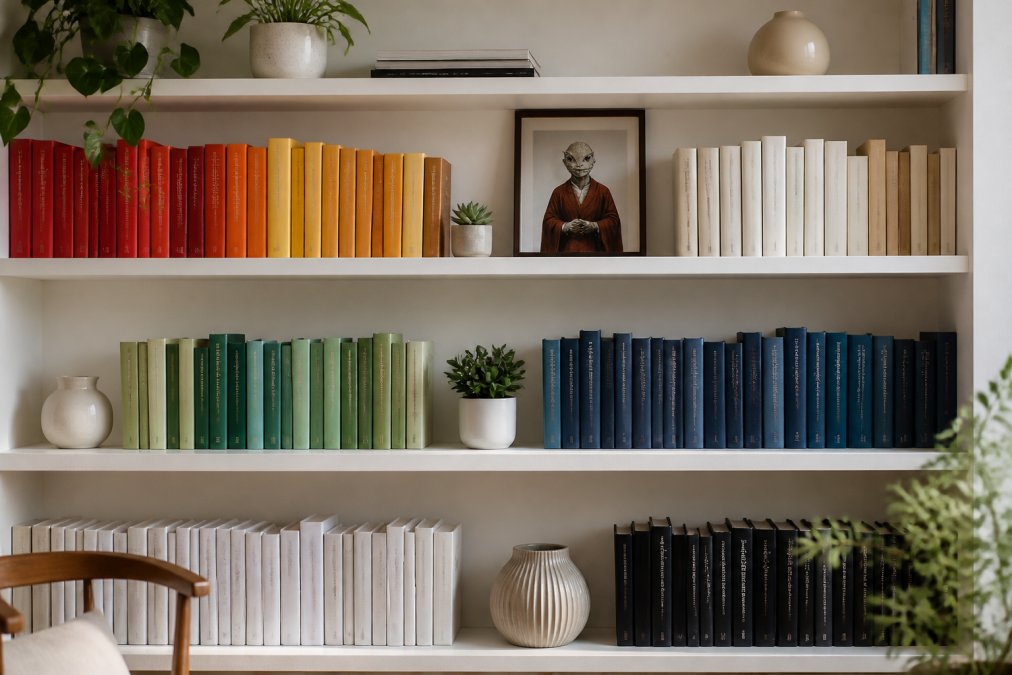
Begin with a ruthless edit. Keep only books you genuinely love or actively read. A shelf holding 40 carefully selected volumes arranged with intention creates far more visual impact than 100 books crammed together.
Color coordination creates the strongest visual foundation. Arrange books by color family rather than alphabetically, grouping deep blues together, creating warm amber sections, and transitioning through greens. This approach feels both modern and deliberately curated.
Breaking up book-heavy sections with decorative objects prevents visual monotony. A small potted succulent, a sculptural bookend, or a framed character art piece from Mind Eracing Studio interrupts the visual rhythm and adds three-dimensionality. The Alice in Wonderland Tea Party Poster at $16.27 works beautifully as a small framed accent within a larger bookshelf arrangement.

Vertical and horizontal book stacking creates visual interest. Lay some books flat and stack them in groups of three to five, then top each stack with a decorative object, plant, or framed print to create focal points that guide the viewer's eye across the shelf.
Lighting amplifies impact. A small picture light mounted above a shelf or a narrow LED strip highlights your curated collection and creates ambient warmth. Minimalist styling means breathing room, leave gaps between book groups and resist the urge to fill every inch.
Reading Nook Design Ideas for Small Spaces
Reading nook design proves that you don't need a dedicated library room to create a literary sanctuary. Even a corner of a bedroom, an alcove under a staircase, or a window seat can become a cozy retreat for deep reading.
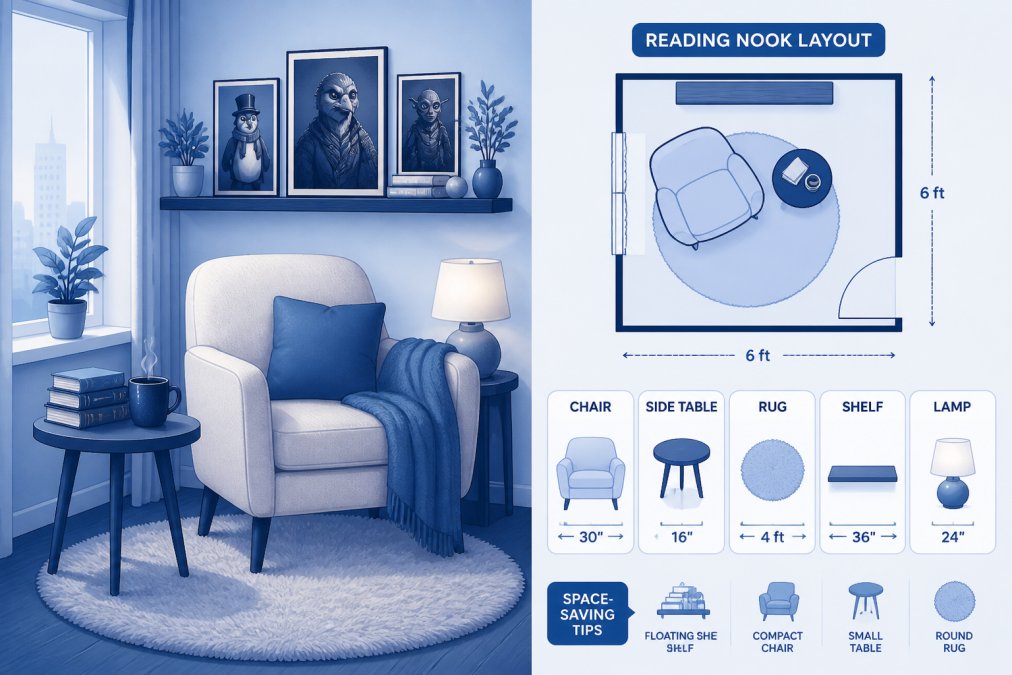
The foundation of any reading nook is comfortable seating. In tight spaces, a single quality chair beats a full sofa. Look for pieces with generous cushioning that don't consume floor space, wingback chairs, barrel chairs, or modern accent chairs work beautifully.
Layered lighting transforms a reading corner from functional to inviting. Natural light is ideal during the day, but task lighting becomes essential for evening reading. A floor lamp positioned beside your chair provides focused light without casting shadows. Pair this with ambient lighting, string lights, a small wall sconce, or character art posters with satin finishes that catch and reflect light.
Small-space reading nooks benefit from vertical storage. Floating shelves mounted above or beside your seating area keep books within arm's reach without consuming floor space. These shelves become opportunities for displaying modern decor ideas for book lovers, stack books with decorative objects, hang character-inspired art at eye level when seated, and incorporate small plants or sculptural bookends.
A side table is essential. Even a narrow console table or small round accent table gives you space for tea, a reading lamp, and bookmarks. In extremely tight spaces, a small floating shelf can serve this function.
The Mr Tomnas' House poster at $16.27 captures the essence of a reading nook, a warm, hand-drawn living room scene with a glowing fireplace and bookshelves. Framing this piece and hanging it in your actual reading corner creates a visual echo that reinforces the purpose and mood of your space.

Color and texture make small reading nooks feel intentional. A small area rug defines the space and adds warmth underfoot. Throw pillows in soft, neutral tones create comfort. A lightweight throw blanket draped over your chair adds texture and functionality.
Best Lighting for Reading Nooks and Book Displays
Best lighting for reading nooks requires balancing task lighting for comfortable reading with ambient lighting that creates a welcoming, literary atmosphere. Poor lighting strains your eyes and diminishes the entire reading experience.
Task lighting must be positioned to illuminate your reading material without casting shadows. A floor lamp positioned to the side of your chair, angled slightly toward the page, provides focused illumination. The ideal brightness for reading falls between 300-500 lux. Warm white light (2700K) creates a cozy, inviting atmosphere that encourages extended reading sessions, while cool white light (4000K or higher) feels more clinical.
Ambient lighting sets the overall mood. String lights, wall sconces, or recessed lighting mounted on dimmers allow you to adjust the atmosphere based on time of day. Character art posters with satin finishes interact beautifully with lighting, the subtle sheen catches and reflects light, making artwork feel more dynamic. A small picture light above a framed character poster amplifies the poster's visual impact while providing subtle ambient illumination.
Avoid placing reading lamps directly behind your chair or in positions that create glare. Light should come from the side or slightly in front of where you're seated. Dimmers are essential, they allow you to adjust lighting intensity based on the time of day and your personal preference.
Floating and Wall-Mounted Shelving Solutions
Floating and wall-mounted shelving solutions maximize vertical space while creating clean, modern displays for books and decorative objects. These options work particularly well for small-space reading nooks and minimalist bookshelf styling.
Floating shelves create the illusion of books suspended in air, which feels more contemporary and less visually heavy than traditional bookcases. They're ideal for displaying curated collections of books arranged by color, interspersed with character art posters and decorative objects. The open design allows light to pass through, preventing the wall from feeling dark or cluttered.
Installation matters. Floating shelves require proper wall anchors and studs to support weight safely. Books are heavier than most realize, a single shelf holding 30-40 books needs industrial-grade brackets. If you're renting or unsure about installation, wall-mounted shelving units with visible brackets offer a sturdy alternative that still reads as modern.
Shelf depth determines what you can display. Narrow shelves (6-8 inches deep) work best for displaying books with spines facing out and small decorative objects. Deeper shelves (10-12 inches) allow you to layer books, some standing, some stacked, creating more dynamic visual arrangements.
Spacing between shelves affects both functionality and aesthetics. Shelves spaced 10-12 inches apart accommodate most hardcover books comfortably. Wider spacing (14-16 inches) creates more dramatic visual impact and allows for taller decorative objects.
Color-coordinated book arrangements look stunning on floating shelves. Group books by color family, then break up sections with decorative objects. A small potted plant, a sculptural bookend, or a framed character poster from Mind Eracing Studio creates visual rhythm. The Whimsical Snail Art Poster at $16.27 works beautifully as a small framed accent on a shelf, introducing whimsy without overwhelming minimalist styling.
Lighting transforms floating shelves into design features. A small LED strip running along the underside of a shelf creates ambient light while highlighting the books and objects displayed below.
Repurposing and Styling Books as Decorative Objects
Repurposing and styling books as decorative objects transforms your literary collection from functional storage into visual design elements. Books as color blocks are the foundation of this approach, display them prominently, arranged by color, to create a living artwork that changes as you read and acquire new books.
Stacking books horizontally creates visual interest and breaks up monotony. Lay books flat in groups of three to five, then top each stack with a small decorative object. A character art poster framed at a small scale, a sculptural bookend, a potted succulent, or a ceramic piece creates focal points that guide the eye across shelves.
Vintage and antique books become decorative objects in their own right. Leather-bound editions, beautifully illustrated volumes, or books with striking cover designs can be displayed as art objects. Group vintage books by spine color or size to create sculptural arrangements on shelves or coffee tables.
Displaying books with decorative objects creates balanced, curated displays. Never arrange books alone, always intersperse them with objects that add texture, color, or visual interest. Small plants, ceramic pieces, framed character art from Mind Eracing Studio, vintage bookends, or sculptural objects prevent shelves from feeling one-dimensional.
Mix spine-out and cover-out displays on the same shelf. Display three books spine-out, then turn one beautiful cover outward, then return to spine-out. This variation creates visual rhythm.
Coffee table styling offers opportunities to repurpose books as decorative objects. Stack art books or beautifully illustrated editions on a coffee table, topped with a small plant or decorative object. This makes books accessible for browsing while reinforcing your literary identity as a design element.
Budget-Friendly DIY Projects for Literary Spaces
Budget-friendly DIY projects for literary spaces prove that you don't need significant investment to create modern decor ideas for book lovers.
DIY Floating Shelves from Reclaimed Wood
Salvage old wood planks from thrift stores or architectural salvage yards. Sand and stain the wood to match your décor, then install with heavy-duty brackets. This costs $20-40 per shelf versus $60-100 for store-bought options.
Framing Character Art Prints
Buy affordable prints from Mind Eracing Studio at $16.27 each, then frame them using inexpensive frames from craft stores. A simple black or natural wood frame costs $10-20 and transforms a poster into gallery-quality wall art.
DIY Reading Nook Lighting
String lights, Edison bulb fixtures, or basic clip lamps from hardware stores cost $15-30 and create dramatic ambient lighting. Pair these with a simple desk lamp for task lighting. Total investment is $40-60 versus $150+ for designer reading lamps.
Repurposing Household Items as Decorative Objects
Glass jars become pencil holders or small plant containers. Old wooden crates become side tables or shelving. Vintage bottles or interesting glassware become decorative objects on shelves. This costs nothing and creates a more personal, eclectic aesthetic.
DIY Bookshelf Backing
Paint the back wall of open shelving a contrasting color or add removable wallpaper to create visual depth. This costs $20-40 and dramatically changes how your bookshelf looks. A deep jewel tone or warm neutral creates a gallery-like backdrop for books and character art.
Hand-Painted or Stenciled Wall Accents
Create simple wall art to complement your character-inspired posters. Paint literary quotes, simple illustrations, or geometric patterns directly on walls using removable paint or stencils. This costs under $20 and creates personalized art.
DIY Book Displays and Bookends
Stack books creatively using heavy objects you already own as bookends. Arrange books at angles to create sculptural displays. This costs nothing and creates visual interest that feels intentional.
| DIY Project | Estimated Cost | Impact | Time Required |
|---|---|---|---|
| Floating shelves from reclaimed wood | $20-40 per shelf | High - creates storage and visual interest | 2-3 hours |
| Framing character art prints | $10-20 per frame | High - transforms posters into gallery pieces | 30 minutes per frame |
| String light installation | $15-30 | Medium - adds ambient lighting and mood | 1 hour |
| Bookshelf wall painting | $20-40 | High - creates dramatic backdrop | 3-4 hours |
| Repurposed household décor | $0 | Medium - adds personal, eclectic touches | Variable |
Creating a space that celebrates your love of books doesn't require a designer budget or a dedicated library room. Modern decor ideas for book lovers center on intentional curation, strategic use of character-inspired art, and layered lighting that transforms reading spaces into sanctuaries.
The easiest starting point is character art that anchors your aesthetic. Mind Eracing Studio's collection of hand-drawn posters, from the Mad Hatter Art Poster to the Alice-Inspired Art Poster, provides storytelling focal points at $16.27 per piece. Choose satin finishes for vibrant, light-catching displays or archival matte for museum-quality depth. Layer these prints with minimalist bookshelf styling, floating shelves, and warm ambient lighting to create spaces that feel both modern and deeply personal. Your reading nook becomes more than furniture and books, it becomes a reflection of the stories that shaped your imagination.
Frequently Asked Questions
What are some modern decor ideas for book lovers on a budget?
Budget-friendly options include arranging books by color on existing shelves, creating a reading nook with a thrifted chair and string lights, and adding affordable character-inspired art posters starting at $16.27. Repurposing old books as decorative stacks, using floating shelves you install yourself, and layering inexpensive textiles like throws and pillows all add literary character without breaking the bank. Focus on one statement piece, like a quality art poster, and build around it.
How do I create a minimalist bookshelf styling that still looks curated?
Minimalist bookshelf styling works best when you limit your color palette, arrange books by spine color or size, and leave breathing room between objects. Include only books you truly love, add 2-3 decorative pieces like small plants or a framed character art print, and use negative space intentionally. Vary the orientation: stack some books horizontally, stand others vertically, and lean a few at angles. This approach keeps the aesthetic clean while showing personality.
What lighting works best for reading nooks and book displays?
The best lighting for reading nooks combines ambient and task lighting. Use a warm-toned floor lamp or pendant light for reading, and add accent lighting like LED strips or small uplights behind floating shelves to highlight book spines and art posters. Avoid harsh overhead lights. Warm white bulbs (2700K) create a cozy atmosphere, while layering different light sources lets you adjust brightness for reading or display. Natural light from windows is ideal when available.
How can character-inspired art posters work in a modern apartment?
Character art from classic tales works beautifully in modern spaces when you choose pieces with contemporary color palettes and clean compositions. Hang a single statement poster above a sofa or in a reading nook, or create a small gallery wall with 2-3 prints in coordinating frames. Select posters like the Mad Hatter Art Poster ($16.27) or Alice Tea Party Poster that feel whimsical but sophisticated. Pair them with minimalist furniture and neutral walls so the art becomes the focal point without clashing with modern aesthetics.
What makes archival matte prints better than satin for book lover decor?
Archival matte prints offer a museum-quality, textured finish that emphasizes fine detail and reduces glare, making them ideal for reading spaces where you'll view the artwork frequently. The matte surface feels more painterly and vintage, which complements literary themes well. Satin prints offer a subtle sheen that deepens color intensity and works better in brighter rooms or for statement pieces. Both options use heavyweight paper (230 gsm for matte, 210 gsm for satin) and are printed in the USA for quality assurance.
This article was written using GrandRanker