
Table of Contents
- Selecting a Color Palette Based on Literary Themes
- Best Whimsical Art Prints for 2026
- Storybook Nursery Decor Ideas That Build Narrative
- Lighting Solutions for a Magical Atmosphere
- Incorporating Classic Toys and Heirlooms Safely
- Budget-Friendly DIY Fable Crafts and Accents
- Age-Appropriate Fable Selection and Safety
- Frequently Asked Questions
Why Classic Fables Work in Nursery Design
Incorporating classic fables into nursery decor taps into something deeper than mere aesthetics. These timeless stories carry narrative weight that grows with your child, creating a visual foundation that doesn't need replacing as tastes evolve. Unlike trendy character merchandise that feels dated within months, fable-inspired art creates a storybook nursery that feels intentional and literary from day one.
A well-chosen fable print works as sophisticated wall art for adults while sparking imagination in children. Your nursery reads as a curated room rather than a generic kids' space. When you build around literary themes, you establish early associations between physical space and storytelling. The room becomes an extension of bedtime stories, a visual continuation of narratives you're already sharing. Fable-inspired pieces from sources like Mind Eracing Studio offer character-driven art that stands apart, giving your space genuine personality.
Selecting a Color Palette Based on Literary Themes
The color story of your nursery should emerge from the fables you're drawn to, not the other way around. A nursery built around woodland fables naturally gravitates toward forest greens, warm browns, and cream tones. Pinocchio-inspired spaces lean into richer reds, golds, and deep wood tones.
Start by identifying which fables resonate with you. Once you've settled on 2-3 core stories, examine the artwork and notice the dominant colors, secondary tones, and overall mood. Neutral tones, soft whites, warm grays, muted taupes, form the best foundation for fable art, letting character-driven prints take center stage. Add depth through textiles: a quilted throw, linen curtains, or a soft rug in complementary tones.
Consider the light in your room. Natural north-facing light can make warm palettes feel slightly cool, while south-facing rooms amplify warmth. Test paint samples or fabric swatches in your actual nursery before committing.
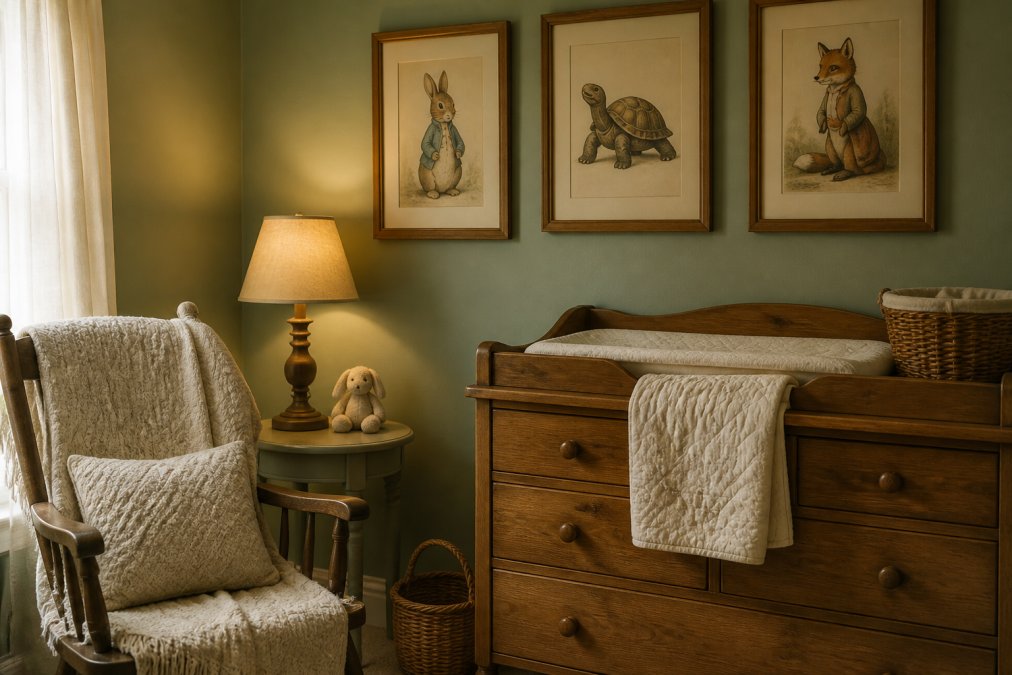
Best Whimsical Art Prints for 2026
Today's character-inspired art market offers genuinely curated pieces that capture the complexity and charm of classic tales. Mind Eracing Studio's collection exemplifies this shift, with each print designed to work as standalone wall art while contributing to a cohesive narrative space.
Their Aesop's Fable poster ($16.27) brings botanical richness to any wall. Lush green stalks arch toward sunlit sky while hidden creatures peek through leaves. The saturated, layered colors feel like a secret garden painted on paper, complementing both minimalist and maximalist nursery styles.

The Pinocchio print ($16.27) captures playful mischief with late-night storytelling energy. Available in smooth satin finish or archival matte, the artwork uses bold brushstrokes and moody, saturated tones. Satin deepens colors with subtle sheen, while matte keeps tones soft and painterly.
The Coachman and the Donkey ($16.27) brings bold, painterly color to any wall. Deep shadows, rich reds, and warm highlights draw the eye. Printed on satin or archival matte paper, the image feels alive and slightly nostalgic.
The Coachman ($16.27) delivers playful storybook energy through a roly-poly figure scattering golden coins into a bubbling pot. Deep blacks and glowing highlights make the character leap from the page.
When selecting whimsical art prints, prioritize quality materials over quantity. High-quality archival paper and vibrant inks ensure your pieces hold color and texture over years. Satin suits rooms with softer lighting and creates visual warmth, while matte works in brighter spaces and emphasizes artistic detail.
Storybook Nursery Decor Ideas That Build Narrative
A storybook nursery tells a story through layered visual elements. Walls, textiles, furniture, and lighting work together to create an immersive narrative environment.
Wall Decor and Mural Inspiration
Your walls are the primary storytelling surface. Beyond framed prints, consider extending the fable narrative through larger visual elements. A painted mural doesn't need to be elaborate; even a simple, hand-painted woodland scene can anchor the room's mood. Removable wallpaper offers a practical alternative, with botanical patterns and vintage storybook imagery available in high-quality options.
The most effective approach combines one large focal point, a mural, oversized print, or gallery wall, with smaller supporting pieces. A gallery wall built around fable-themed prints creates visual interest without requiring permanent changes.
Textiles and Luxurious Fabrics
Textiles carry narrative weight that solid walls cannot. Quilted blankets with embroidered details, linen curtains in soft tones, and vintage rugs add texture and warmth. A quality crib quilt becomes a focal point; look for pieces with vintage patterns, botanical prints, or subtle character imagery rather than bright, graphic designs. Layering textures, a soft cotton sheet under a quilted coverlet, a linen throw draped over the changing table, creates depth and visual interest.
Linen or cotton blend curtains in neutral tones let framed fable prints stand out while maintaining the room's literary mood.
Vintage Furniture and Antique Accents
Vintage and antique furniture pieces anchor a storybook nursery. A distressed wooden changing table, a bentwood rocker, or an antique dresser painted in soft tones creates the foundation for a curated, intentional space. Antique frames elevate fable prints into gallery-quality pieces. Mix frame styles, some ornate, some simple, for a collected-over-time aesthetic.
A small bookshelf filled with classic illustrated editions becomes both decor and a practical library for bedtime stories.
Lighting Solutions for a Magical Atmosphere
Lighting transforms a nursery from functional to enchanted. Soft, warm light is essential; harsh overhead fixtures undermine the storybook mood. Layer lighting through multiple sources: a dimmable ceiling fixture, a bedside table lamp, and perhaps a small wall sconce.
Warm white bulbs (2700K color temperature) create the coziest effect (energy.gov). Avoid cool white or daylight bulbs. A dimmer switch allows you to adjust light for different times of day. Consider accent lighting that highlights your focal fable prints without creating glare.
Incorporating Classic Toys and Heirlooms Safely
Vintage toys and family heirlooms add irreplaceable character to a nursery, but safety must come first. Soft toys should be thoroughly cleaned and inspected for loose seams, small parts, or deterioration (cpsc.gov). Display fragile vintage stuffed animals on high shelves out of reach rather than in the crib.
Wooden toys are generally safer if solid, well-maintained, and free of lead paint or splinters (the EPA). Antique books work beautifully as decor on high shelves. Glass items, ceramic figurines, and other breakables belong on wall-mounted shelves or high furniture, completely out of reach.
Document family heirlooms with photos. If a toy is too fragile or unsafe for the nursery, photograph it and frame the image instead.
Budget-Friendly DIY Fable Crafts and Accents
Creating your own fable-inspired accents keeps costs manageable while adding personal touches. Hand-painted wooden signs featuring fable quotes or character names add literary charm for under $15. Embroidered wall hangings bring handmade warmth, even basic embroidery adds texture and personal meaning. Decoupage projects using vintage book pages create layered wall art from inexpensive materials.
Paper cut art and fabric collages offer accessible DIY options. These projects work best when they complement purchased pieces rather than replacing them entirely. A mix of professionally printed art from Mind Eracing Studio and personal DIY creations creates a space that feels both curated and authentically yours.
Age-Appropriate Fable Selection and Safety
Not all fables work equally well for all ages. For infants and very young toddlers (0-2 years), focus on simple, non-threatening animal stories without dark elements. For toddlers and preschoolers (2-4 years), introduce slightly more complex narratives with clear consequences and relatable emotions. For older preschoolers and early elementary (4-6 years), more sophisticated fables with genuine moral lessons become meaningful.
The visual representation matters as much as the story itself. A Pinocchio print rendered in whimsical, playful style feels age-appropriate for a toddler's room. Soft watercolor illustrations feel gentler than bold, dramatic artwork. Consider updating your wall art as your child grows, using frames and prints you can easily swap to allow the space to evolve while maintaining its literary foundation.

Creating a nursery around classic fables requires thoughtful curation, but the payoff is a space that grows with your child and supports their imagination. Start with quality art from sources like Mind Eracing Studio that prioritize archival materials and character-driven design, then layer in textiles, vintage accents, and DIY touches that make the space genuinely yours. The result is a storybook nursery that feels less like a themed room and more like a portal into the literary world you're building for your child.
Frequently Asked Questions
How do I choose a cohesive color palette for a fable-themed nursery?
Start by selecting 2-3 primary colors from your chosen fable's mood, soft greens and warm golds for woodland tales, pastels for whimsical stories, or muted jewel tones for darker narratives. Use one color as your base (walls), one as your accent (textiles, decor), and one as a highlight (art frames, small objects). This keeps the space visually coherent while allowing fable-inspired art prints to anchor the design. Mind Eracing Studio's character-driven prints work well as your color reference point.
What makes high-quality archival matte prints better than standard poster options?
Archival matte prints use acid-free paper and fade-resistant inks that preserve colors for decades, unlike standard posters that yellow and deteriorate over time. The matte finish eliminates glare, making the artwork easier to view from any angle in a nursery. Satin finishes add luminosity and depth, while matte maintains a soft, painterly appearance. Both options from Mind Eracing Studio ($16.27 each) use high-quality materials, ensuring your fable-inspired art remains vibrant through years of childhood memories.
Are vintage items and antique accents safe for a baby's nursery?
Vintage furniture and heirlooms can be safe if properly inspected and prepared. Check for lead paint (use an EPA-approved test kit), loose parts, sharp edges, or small detachable objects that pose choking hazards. Sand and refinish surfaces as needed, and secure heavy pieces to walls to prevent tipping. Antique frames work beautifully for fable art, but ensure glass is tempered and frames are mounted securely out of reach. Textiles should be washable or professionally cleaned before use near infants.
Can fable-inspired decor work in a modern or minimalist nursery?
Yes. Choose literary-themed art with clean lines and limited color palettes, watercolor prints or line-drawn character art pair well with modern furniture. Use one statement piece rather than filling walls, and balance whimsical elements with neutral tones, simple wooden furniture, and uncluttered shelving. This minimalist approach to storybook nursery decor ideas lets fable art become the focal point without overwhelming a contemporary space. Mind Eracing Studio's character prints in satin or matte finishes adapt to both eclectic and restrained aesthetics.
This article was written using GrandRanker