
Table of Contents
- Verify the Seller's Reputation and Credentials
- Check for Certificate of Authenticity and Provenance
- How to Spot Fake Art Prints Before You Buy
- Art Print Quality Checklist: What to Inspect
- Secure Your Payment and Protect Your Transaction
- Understand Return Policies and Shipping Insurance
- Post-Purchase Care and Storage for Your Prints
Last Updated: August 14, 2026
Verify the Seller's Reputation and Credentials
Before committing to an online art print purchase, investigate the seller's background. Check how long they've been in business, look for clear contact information and physical address verification, and search for independent reviews on Google, social media, and art forums. Pay attention to patterns in feedback, consistent complaints about print quality, shipping damage, or misrepresented colors are red flags. Verify the seller uses secure payment methods and displays trust badges like HTTPS encryption and SSL certificates. Reputable sellers are transparent about their production methods and respond promptly to questions about printing processes, paper stock, and return policies.
Check for Certificate of Authenticity and Provenance
A certificate of authenticity verifies an artwork's origin and legitimacy, serving as proof for future resale or insurance. It should include the artist's name, print title, edition number and total print run, creation date, printing technique, paper type, and the artist's or authorized representative's signature. Limited edition prints (numbered like "5/100") are more valuable than open editions and carry additional authenticity weight when hand-signed.
Verify the provenance chain, the documented history of ownership from creation to your purchase. Ask the seller to provide documentation showing the print's journey. Be cautious about prints without proper documentation; legitimate limited editions and signed works always come with certificates. Check for security features like holograms or watermarks on the certificate itself to prevent forgery.
How to Spot Fake Art Prints Before You Buy
Counterfeit prints are common in online marketplaces. Request high-resolution photos from the seller before purchasing and examine image quality for consistent color saturation without banding or muddy colors. Inspect the paper stock, genuine art prints use archival quality, acid-free paper that resists yellowing. Check that signatures are consistent across the edition and numbering is clear, not smudged.
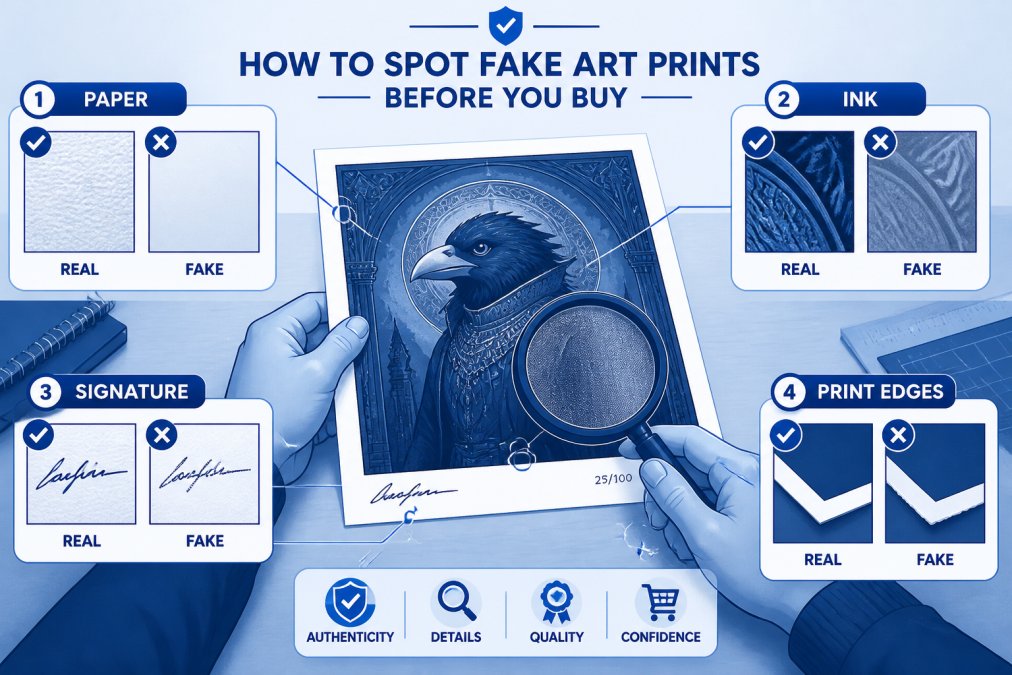
Professional art prints use pigment-based inks, which are more fade-resistant than dye-based inks. Examine the print under different lighting conditions, colors should remain consistent and vibrant. Ask the seller how many prints are in the edition; vague answers are warning signs. Compare the print to authenticated examples from other reputable sellers or the artist's website, noting any significant differences in color, size, paper texture, and signature placement.
Art Print Quality Checklist: What to Inspect
Before finalizing your purchase, use this checklist to evaluate whether the art print meets professional standards:
Visual Elements:
- Colors are vibrant and consistent across the entire print
- No visible banding, pixelation, or color gradation issues
- Image sharpness is crisp with no blurring (unless intentional artistic style)
- Ink coverage is even with no streaks or spots
- Signature (if present) is clear and properly positioned
Paper and Material Quality:
- Paper is acid-free and archival quality
- Paper weight is substantial (typically 200-300 gsm for fine art prints)
- Finish matches description (matte, satin, or glossy)
- No visible watermarks, yellowing, or discoloration
- Edges are cleanly cut with no fraying
Production Standards:
- Print uses pigment-based inks
- Color management appears professional
- Numbering and signature (for limited editions) are properly applied
- Certificate of authenticity is included
- Seller can explain the printing technique used
Authenticity Markers:
- Limited edition information is clearly documented
- Hand-signed prints show actual artist signatures
- Provenance documentation is available
- Print matches authenticated examples
Mind Eracing Studio's satin and archival matte print options meet these standards. Inspect your print immediately upon arrival against this checklist.
Secure Your Payment and Protect Your Transaction
Use credit cards or payment processors like PayPal, Apple Pay, or Google Pay that offer buyer protection. These methods provide chargeback protection if the print doesn't arrive, is misrepresented, or is counterfeit. Avoid wire transfers, cryptocurrency, or direct bank transfers, which offer no recourse if something goes wrong.
Check that the payment page uses HTTPS encryption (look for the padlock icon). Legitimate sellers never request payment outside their secure checkout system. Look for fraud protection guarantees, many reputable sellers offer money-back guarantees if the print doesn't match the description. Start with smaller orders from unfamiliar sellers to test their reliability before making larger purchases. Keep detailed records of your transaction, including order confirmations, receipts, tracking information, and correspondence with the seller.
Understand Return Policies and Shipping Insurance
Review the seller's return policy before purchasing. It should specify the timeframe for returns (typically 14-30 days), the condition required to qualify, and whether return shipping is covered. Reputable sellers offer hassle-free returns if the print doesn't match the description or arrives damaged.
Ask whether shipping insurance is included or available as an add-on, it protects your investment during transit. Inquire about packaging methods; proper packaging includes bubble wrap, foam corners, and sturdy boxes. Check the seller's damage claim process and look for sellers who offer tracking and signature confirmation. These options ensure you know when the print arrives and can document its condition.
Post-Purchase Care and Storage for Your Prints
Display prints away from direct sunlight, which causes colors to fade and paper to yellow. Position prints in areas receiving indirect or diffused light. Maintain stable temperature and humidity levels (60-70°F with 30-50% relative humidity) to prevent warping and cracking. Avoid bathrooms, kitchens, and areas near heat sources.
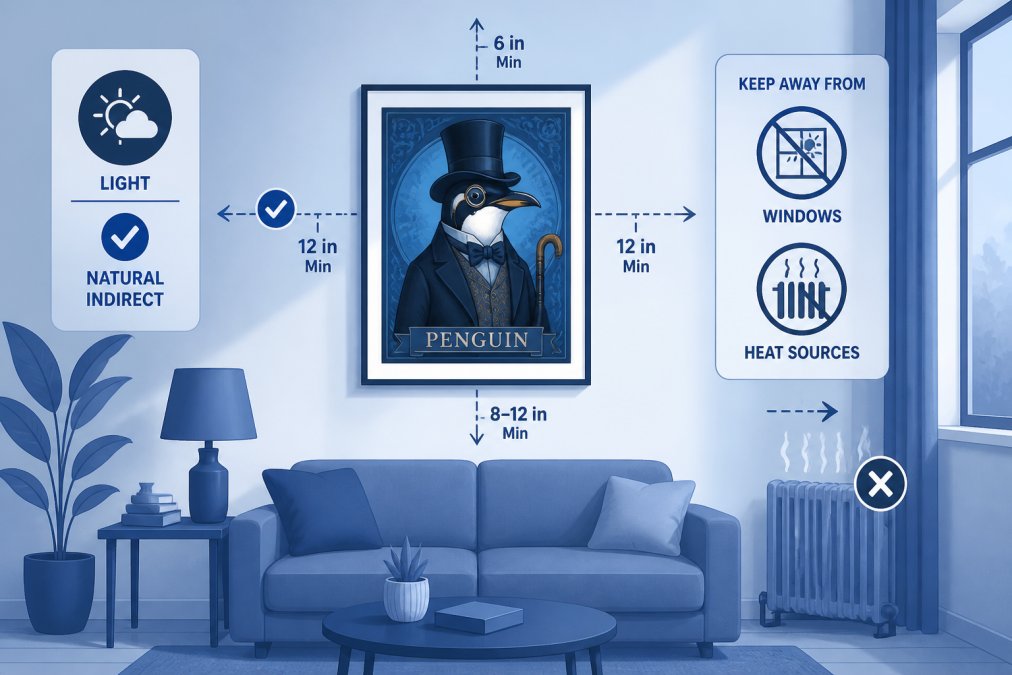
Use archival framing materials including acid-free matting, UV-protective glass, and archival backing. Handle prints with clean, dry hands or cotton gloves to avoid transferring oils. Store unframed prints in archival-quality boxes or sleeves, using acid-free tissue paper to separate them. Keep prints away from pests and pollutants in climate-controlled spaces. Clean prints gently with a soft brush or microfiber cloth, never use water or cleaning solutions. Document your collection with records of each print's details, artist, title, edition number, purchase date, and condition.
Buying art prints online safely requires diligence in verifying seller reputation, demanding proper authentication, inspecting quality indicators, using secure payment methods, understanding return policies, and caring for your prints properly. These steps protect your investment and ensure you receive genuine, high-quality artwork.
Mind Eracing Studio brings these principles to life through their curated collection of character-inspired prints. Their commitment to archival quality materials and transparent production practices means you can buy with confidence, knowing each piece is backed by genuine craftsmanship and attention to detail.
Frequently Asked Questions
How do I know if an art print is authentic and not counterfeit?
Authentic art prints include a certificate of authenticity with the artist's name, edition number, and signature. Check the seller's provenance documentation and verify the print run details. Look for hand-signed and numbered prints from reputable sellers. Counterfeit prints often lack proper documentation, have inconsistent signatures, or come from unverifiable sources. Always request proof of authenticity before purchasing.
What payment methods are safest when buying art prints online?
Use credit cards or digital payment services that offer buyer protection, such as PayPal or Apple Pay. These methods allow you to dispute charges if the print arrives damaged or doesn't match the listing. Avoid wire transfers or direct bank payments, which offer no recourse. Check that the website uses HTTPS encryption (look for the padlock icon) before entering payment details. Never share sensitive information via email or unsecured forms.
What should I look for in a return policy when buying art prints?
A reputable seller offers a clear return policy allowing at least 14-30 days for returns if the print doesn't meet expectations or arrives damaged. Check whether they cover return shipping and provide refunds or replacements. Look for policies that address color accuracy issues, since online photos may not perfectly represent the actual print. Verify shipping insurance is included or available, protecting your purchase during transit.
How can I tell if an art print will look good in my space before ordering?
Request high-resolution images showing the print in different lighting conditions and room settings if available. Check customer reviews and testimonials with photos of prints in actual homes. Consider the color management and how the print's palette matches your décor. Order a smaller size first to test the look, or look for sellers offering preview services. Understand that archival quality prints maintain color accuracy over time, making them reliable investments for your space.
This article was written using GrandRanker