
Table of Contents
- What Sets Curated Art Prints Apart from Mass-Produced Options
- Fine Art Giclée Prints vs Mass-Produced: Understanding the Technical Difference
- Limited Edition vs Open Edition Prints: What You Need to Know
- Durability, Resale Value, and Long-Term Investment
- Price, Accessibility, and Perceived Value
- Environmental Impact and Sustainability
- How to Identify High-Quality Art Prints: A Visual Guide
- Conclusion
Last Updated: August 5, 2026
What Sets Curated Art Prints Apart from Mass-Produced Options
Curated art prints come from deliberate selection based on artistic merit and originality, prioritizing the artist's vision through high-quality production methods like fine art giclée printing. Mass-produced prints are created for broad market appeal using standardized techniques designed to maximize volume and minimize cost.
At Mind Eracing Studio, we focus on curated collections of character-inspired art drawn from classic tales and fables, emphasizing the storytelling behind each piece rather than generic commercial formulas. The real tension isn't about quality alone, it's about intent. A mass-produced print asks "How can we make this cheaply and quickly?" A curated print asks "Does this piece deserve to exist, and how can we make it right?"
Fine Art Giclée Prints vs Mass-Produced: Understanding the Technical Difference
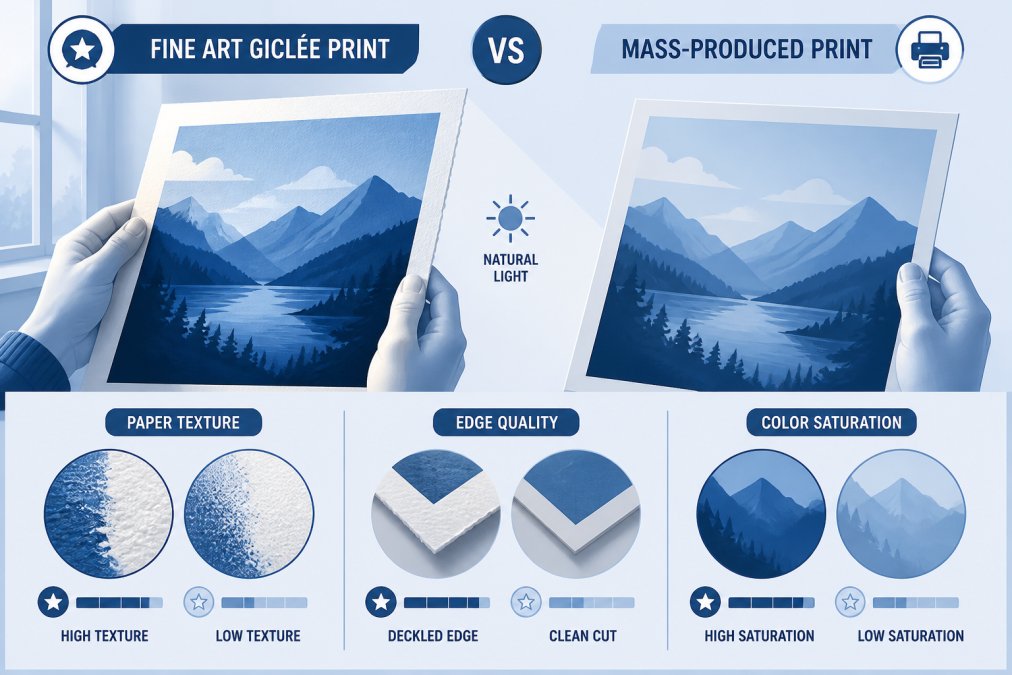
Giclée printing uses inkjet technology that deposits microscopic droplets of archival ink onto premium substrates with extraordinary precision, allowing exceptional color fidelity and tonal range. Mass production typically uses offset printing or lower-grade inkjet systems designed for speed, sacrificing nuance for throughput.
The difference becomes visible under close examination. A giclée print reveals texture, depth, and color subtlety that mass-produced prints flatten or oversimplify. Giclée prints maintain the full color gamut of the original, while mass-produced versions often reduce the palette to cut ink costs.
Printing Substrates and Archival Quality
Fine art prints use acid-free papers and premium canvas materials engineered for longevity. Archival quality refers to materials meeting preservation standards designed to last 100+ years without significant color shift or deterioration. Mass-produced prints typically use standard commercial paper containing lignin and other compounds that break down under light and humidity, causing visible aging within 5-10 years.
Canvas texture varies dramatically too. A curated print on canvas has an intentional weave chosen to complement the artwork, while mass-produced canvas often uses cheaper weaves that feel thin or inconsistent. Mind Eracing Studio offers both satin and archival matte print options, each chosen for specific visual and longevity characteristics.
Color Fidelity and Visual Impact
Fine art prints use color management systems that account for the specific characteristics of inks, substrate, and lighting conditions, ensuring what you see on screen translates accurately to the physical print. Mass-produced prints use generic color profiles optimized for "acceptable" results across many images, which works fine for photographs but can shift colors in artwork where color carries meaning.
A curated print of a character's costume might render the fabric color exactly as the artist intended, while a mass-produced version might shift toward warmer or cooler tones. The visual impact compounds this, a print with superior color fidelity commands more attention on your wall and feels more present and intentional.
Limited Edition vs Open Edition Prints: What You Need to Know
Limited edition prints are produced in a fixed quantity, then the plates or files are destroyed or archived. Once sold out, no more will be made. Each print is typically numbered (like "42/250") to verify authenticity and rarity. Open edition prints have no production limit and can be printed indefinitely.
The perceived value difference is substantial. A limited edition print might appreciate slightly over time if the artist gains recognition, while an open edition will likely depreciate or hold flat value. Collectors specifically seek limited editions because they represent a finite artistic statement.
Durability, Resale Value, and Long-Term Investment
Archival Materials and Longevity
Prints made with acid-free papers, UV-resistant inks, and premium substrates will look nearly identical 20 years from now. Mass-produced prints fade noticeably, yellow, and sometimes develop visible mold or deterioration if exposed to humidity. This matters for personal satisfaction and resale value, a print that's maintained its color and condition will command a higher price.
Lifecycle and Resale Potential
A curated, limited edition print on archival materials has genuine resale potential. If the artist gains recognition or the piece becomes harder to find, collectors will pay premium prices for well-preserved copies. A mass-produced print has almost no secondary market value because new copies are always available at the original price.
The resale market for curated art prints is active on platforms dedicated to art sales and collector communities, with character-inspired art from classic tales tending to hold value well.
Price, Accessibility, and Perceived Value
Curated prints cost more, sometimes significantly more, than mass-produced alternatives. If you're furnishing a rental apartment or decorating temporarily, mass-produced prints make economic sense. But if you're building a home you care about, curated prints deliver disproportionate value.
Perceived value affects how you relate to the piece over time. A curated print feels special because it's the result of deliberate artistic choices. You'll notice it more, appreciate it more, and be less likely to replace it. The price difference also signals quality to your guests, a carefully chosen print announces that you've thought about your space.
For buyers considering character-inspired art from classic tales, the curated approach means each piece reflects thoughtful storytelling rather than commercial formulas. Mind Eracing Studio's focus on this niche means pricing reflects artistic intention, not just production costs.
Environmental Impact and Sustainability
Mass-produced printing is more efficient per unit, but mass production creates waste in other ways. Because prints are cheap and replaceable, they're discarded more frequently. A print lasting 5 years and then discarded has worse lifecycle impact than a print lasting 30 years, even if the longer-lasting print required more resources upfront.
Curated prints often involve more deliberate material choices. Acid-free papers are typically sourced more carefully, and giclée printing uses less ink overall because precision means less waste during production. Because curated prints are kept longer, the per-year environmental cost is lower.
The real environmental win comes from intention. When you buy a curated print you genuinely love, you keep it. From a sustainability perspective, the curated approach generates less total waste despite potentially higher upfront resource use.
How to Identify High-Quality Art Prints: A Visual Guide
Knowing what to look for when evaluating a print helps you distinguish curated quality from mass-produced mediocrity.
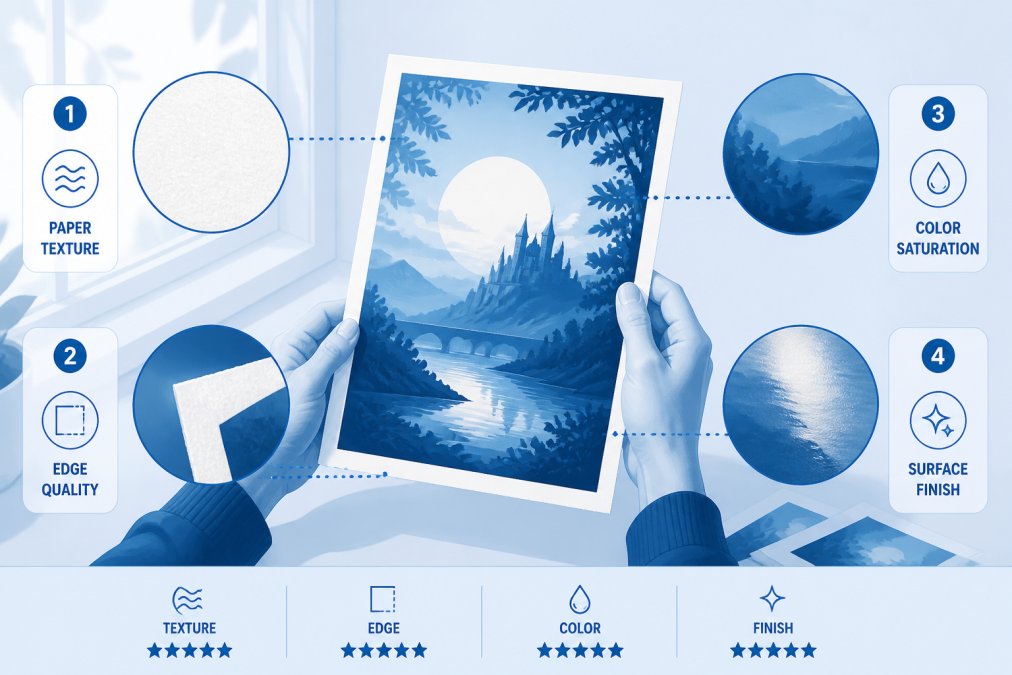
Color depth and saturation. Hold the print at different angles under natural and artificial light. A high-quality print maintains consistent color and vibrancy. Mass-produced prints often show color shift depending on angle or light source, indicating inferior color management.
Paper or canvas texture. A curated print on canvas has a consistent, intentional weave that feels substantial. On paper, archival quality feels heavier than commercial paper with a smooth surface without being slick.
Edge quality and finish. High-quality prints have clean, precise edges with no fraying or ink bleeding. The finish should be even across the entire surface. Mass-produced prints sometimes show uneven finishes or ink bleeding at the edges.
Ink saturation and uniformity. Solid color areas should be uniform without visible dots, streaks, or variations. Pixelation or compression artifacts indicate the image was over-simplified during production.
Backing and mounting. Archival backing should be acid-free and clearly labeled. Poor backing allows air and moisture to degrade the print from behind.
Documentation and numbering. Limited edition prints include a number (like "47/250") and often a signature or artist mark, verifying authenticity and rarity. Mass-produced prints have no edition information.
Weight and substance. A curated print feels substantial when held, coming from substrate material and production care. Mass-produced prints often feel flimsy, signaling lower-quality materials.
When evaluating character-inspired art from Mind Eracing Studio, these markers help confirm you're receiving a thoughtfully produced piece. The satin and archival matte options both show these quality markers, with differences primarily in finish aesthetic rather than underlying production standards.
The choice between curated and mass-produced art prints reflects how you want to live with your space. Curated prints are for people who care about the story behind the art, who want pieces that will age gracefully, and who view their walls as an extension of their identity. They cost more upfront, but deliver value that compounds over time through durability, aesthetic satisfaction, and potential resale appeal.
If you're drawn to character-driven art that brings classic tales to life, Mind Eracing Studio's curated approach, with satin and archival matte print options, ensures that every piece reflects intentional artistic vision rather than commercial formulas. Your walls deserve art that you'll love for years to come.
Frequently Asked Questions
What is the difference between curated art and mass-produced prints?
Curated art is individually selected and often limited in production, emphasizing artistic integrity and quality materials like acid-free paper and archival inks. Mass-produced prints prioritize volume and accessibility, using standard printing methods and materials. Curated pieces typically feature higher color fidelity, better durability, and often come from independent artists or carefully vetted collections. Mass-produced options offer affordability and immediate availability but may lack the visual impact and longevity of fine art prints.
How can you tell if an art print is high quality?
High-quality art prints display sharp, detailed reproduction without pixelation or compression artifacts. Check for archival-grade materials like acid-free paper and UV-resistant inks that resist fading. Examine the color gamut and color fidelity by comparing the print to reference images. Feel the substrate texture and weight, fine art prints use heavier, premium materials. Look for consistent color saturation across the entire piece and verify the artist's involvement in production. Limited edition prints with provenance documentation typically indicate higher quality than open edition mass-market options.
What is the difference between limited edition and open edition prints?
Limited edition prints are produced in a fixed quantity and often signed and numbered by the artist, creating scarcity and perceived value. Once the edition sells out, no more copies are made. Open edition prints have no production limit and can be reprinted indefinitely, making them more accessible but less exclusive. Limited editions typically command higher resale value and better hold their worth over time. Open editions suit budget-conscious buyers and those seeking specific designs without investment concerns, while limited editions appeal to collectors prioritizing artistic integrity and potential appreciation.
Does curated art hold its value better than mass-produced prints?
Yes, curated and limited edition art prints typically maintain or appreciate in value over time, especially pieces from recognized independent artists or prestigious collections. Factors affecting resale value include the artist's reputation, edition size, provenance documentation, and condition. Mass-produced prints depreciate quickly since they lack scarcity and artistic exclusivity. Fine art giclée prints with archival materials resist fading and deterioration, preserving aesthetic and monetary value. Original artwork and bespoke pieces command premium prices in the secondary market, while commercial decor prints rarely appreciate.
This article was written using GrandRanker