
Table of Contents
- Why Archival Matte Prints Matter for Your Home
- Matte vs. Glossy for Wall Art: Which Finish Wins
- Understanding Giclée Print Quality Standards
- Top Archival Matte Print Options for Home Decor
- How to Frame Archival Matte Prints for Maximum Impact
- Paper Weight, Texture, and Archival Quality Explained
- Maintaining Your Archival Prints Long-Term
- Conclusion
Last Updated: August 9, 2026
Why Archival Matte Prints Matter for Your Home
Archival matte prints use acid-free paper, pigment-based inks, and museum-grade construction designed to last a century or more without visible degradation. Unlike standard commercial prints that fade within years, they're the gold standard for serious collectors.
Matte finishes eliminate glare and reflections, allowing artwork to command attention rather than fighting light in your room. This quality is especially valuable in well-lit spaces where glossy finishes create distracting hot spots.
Mind Eracing Studio specializes in archival matte prints featuring character-inspired art from classic tales and fables, offering collectors the combination of storytelling depth and print longevity that transforms wall decor into lasting investment. When you're spending money on art that means something, you want it printed on paper that will still look vibrant decades from now.
The technical foundation rests on three pillars: acid-free paper that resists yellowing, pigment-based inks that resist fading, and proper storage conditions.
Matte vs. Glossy for Wall Art: Which Finish Wins
A matte finish diffuses light across the paper surface, eliminating reflections and glare. Glossy finishes concentrate light, creating shine and sometimes harsh reflections that obscure the image depending on viewing angle and room lighting.
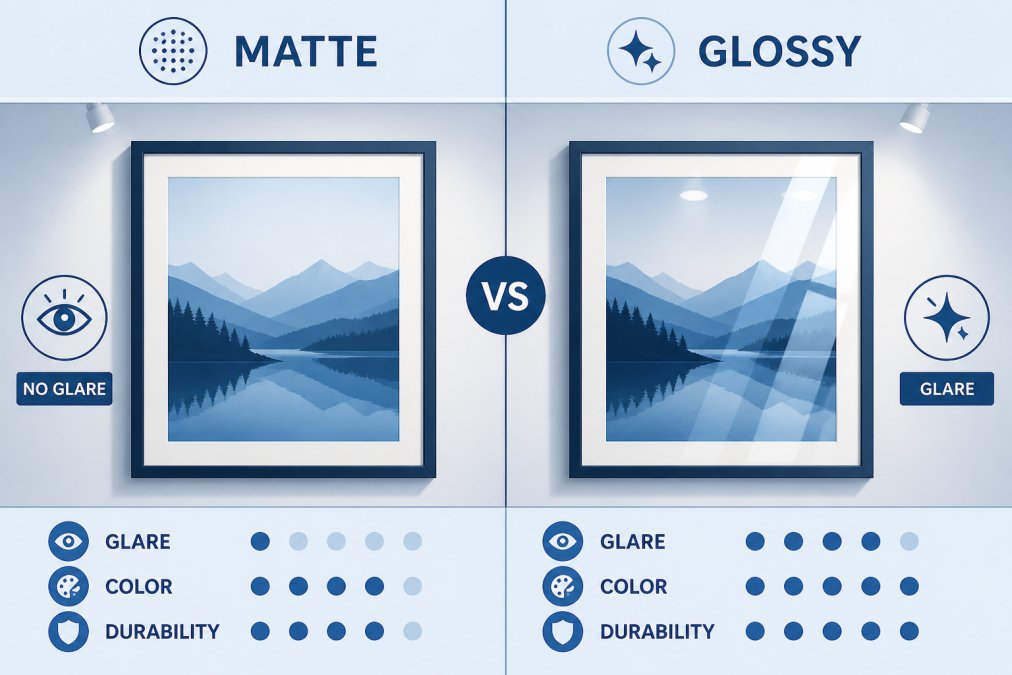
For home decor, matte finishes typically perform better across varied lighting conditions. A glossy print looks stunning in dim, controlled gallery lighting but becomes problematic in naturally lit living rooms where sunlight creates unwanted reflections. Matte surfaces render colors accurately under ambient light without gloss-induced brightness.
The texture difference matters equally. Matte paper has subtle grain that adds tactile depth and sophistication, while glossy surfaces feel commercial by comparison. Character-driven art from classic tales benefits from matte presentation, as the softer finish complements narrative-rich imagery and vintage aesthetics.
Glossy finishes excel for high-contrast images with dense blacks and vivid colors, where the reflective surface amplifies saturation. For most home environments and character-inspired artwork, matte wins on practicality and visual harmony.
Understanding Giclée Print Quality Standards
Giclée printing uses high-resolution inkjet technology with seven or more color channels to achieve museum-quality output. The process sprays microscopic droplets of pigment-based ink onto archival paper at extremely high resolution, often 1440 dpi or higher.
What separates giclée from standard inkjet printing is precision and material quality. Professional giclée labs use color-managed workflows, calibrated monitors, and spectrophotometers to ensure every print matches the original artwork's color values.
Pigment-based inks used in giclée resist fading far better than dye-based alternatives. According to longevity testing standards, pigment-based giclée prints on archival paper can maintain color accuracy for 100-300 years depending on storage conditions. This is why museums specify giclée for limited-edition reproductions.
Not all giclée is created equal. Professional services like Mpix and Octo Prints maintain rigorous standards: they test color accuracy on every print run, use certified archival paper, and provide longevity guarantees.
For character-inspired art, giclée printing preserves narrative detail and emotional depth. Fine line work, subtle color gradations, and intricate details all render faithfully through the giclée process.
Top Archival Matte Print Options for Home Decor
Mind Eracing Studio Archival Matte Prints
Mind Eracing Studio leads with archival matte prints designed for collectors who want character-driven art with lasting quality. Their curated collection features character-inspired designs from classic tales and fables, printed on archival matte stock that eliminates glare while preserving color saturation and detail.
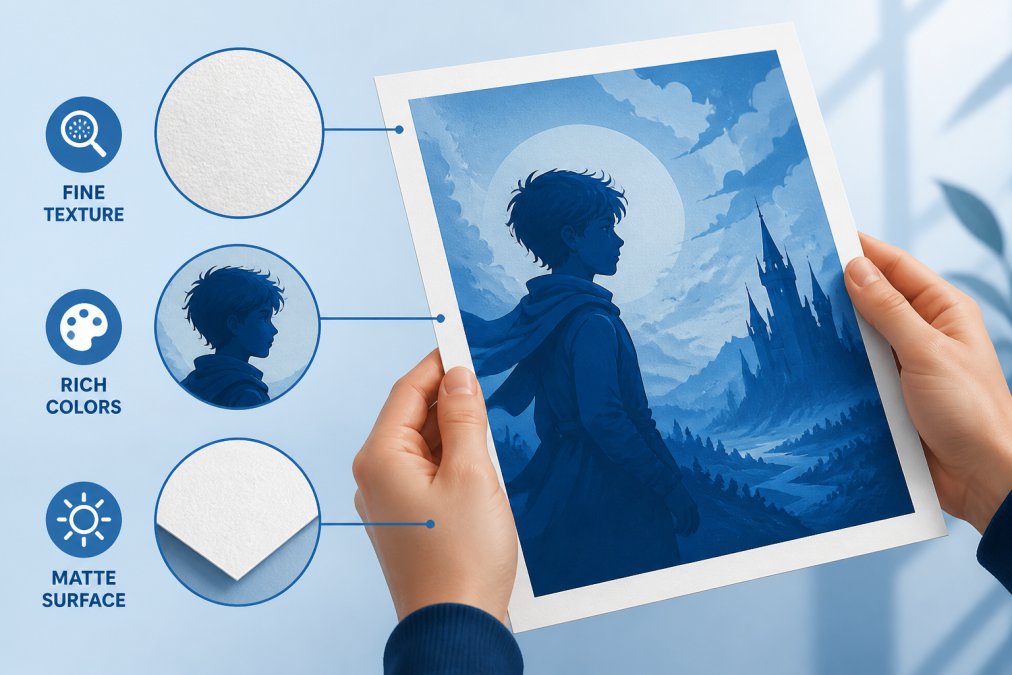
What distinguishes Mind Eracing Studio is editorial curation. Rather than offering thousands of generic options, they've selected specific character-driven pieces that work cohesively as a collection. You're investing in a thoughtfully assembled piece that fits into a larger narrative aesthetic.
The satin and archival matte options give flexibility based on lighting and preference. Matte delivers glare-free presentation most collectors prefer, while satin offers subtle sheen that enhances color without introducing reflections. Both use archival-quality materials.
For collectors asking whether these prints will look as good on their wall as in photos, the answer is yes in typical home lighting. The archival matte finish renders colors accurately under ambient light without color-shift problems that plague glossy finishes in bright rooms.
Mpix Giclée Deep Matte Prints
Mpix delivers professional-grade giclée printing with their Deep Matte option, using a seven-color system for ultra-detailed color reproduction. Their process is certified archival, maintaining color for up to 100 years in home display conditions and 300 years in dark storage.
The Deep Matte paper offers a smooth, non-reflective surface that works exceptionally well for fine art photography and detailed artwork. Mpix color-checks every print and handles packaging by skilled team members. The range of available sizes accommodates everything from small character studies to statement pieces.
One practical note: Deep Matte paper can underperform with images containing very dense shadows and rich blacks, where other labs might recommend Fine Art or Semi Gloss options instead.
Red River Paper Premium Matte 230
Red River Paper Premium Matte 230 targets photographers and artists who want to print archival matte prints themselves. At 230gsm weight and 11mil thickness, this paper is noticeably heavier than retail-brand premium matte options.
The ultra-smooth, non-reflective surface and bright white tone deliver professional results on any inkjet printer. Acid-free construction ensures archival quality, your prints won't yellow over decades. The paper feeds consistently and resists fingerprinting.
The practical tradeoff is responsibility. You own the entire printing process: color calibration, ICC profile management, ink selection, and print settings. If you already have a high-quality inkjet printer and understand color management, Red River Premium Matte 230 offers outstanding value.
For character-driven art, this paper renders color accurately and shows fine detail beautifully. The cost per print is significantly lower than professional services, making it attractive for printing multiple pieces.
Canson Infinity Rag Photographique
Canson Infinity Rag Photographique represents the premium tier: 100% cotton rag base, acid-free, internally buffered for archival quality. This is museum-grade paper used by fine art photographers and printmakers who demand uncompromising longevity.
The exceptionally smooth matte surface and high Dmax rating deliver deep blacks and rich colors that rival original artwork. The paper dries instantly and shows exceptional water resistance. Available in multiple weights and formats, Canson offers flexibility for different artistic visions.
The premium pricing reflects material quality and archival pedigree. If you're printing limited-edition work or preparing pieces for gallery exhibition, Canson Infinity Rag justifies the cost.
Octo Prints Museum-Quality Archival Prints
Octo Prints specializes in museum-quality archival paper prints with a smooth neutral-white matte finish, guaranteed to last 100-200+ years without fading. They use state-of-the-art high-resolution inkjet technology with FSC Certified, acid-free paper that meets museum conservation standards.
The flexibility in sizing accommodates everything from small framed pieces to large gallery installations. Their smooth neutral-white matte finish eliminates glare while maintaining true color accuracy.
For collectors building a permanent collection or commissioning limited-edition prints, this service delivers peace of mind that your investment will outlast you.
How to Frame Archival Matte Prints for Maximum Impact
Framing archival matte prints properly protects your investment and enhances visual presentation. Use acid-free mat board, acid-free mounting tape, and UV-protective glass throughout the entire frame assembly.
Standard glass allows UV light to fade prints over time; UV-protective glass blocks 99% of harmful rays, dramatically extending print life. This matters especially for character-inspired artwork displayed in naturally lit spaces.
Never use regular tape or adhesive, these introduce acid and moisture that will eventually damage the print. Archival mounting uses acid-free tape or conservation hinging methods that allow the print to expand and contract naturally with humidity changes.
A mat board creates spacing between print and glass while adding visual sophistication. For matte prints, a simple mat in white, cream, or neutral tones lets the artwork command attention.
Paper Weight, Texture, and Archival Quality Explained
Paper weight measured in gsm (grams per square meter) indicates thickness and durability. Standard copy paper is 80gsm. Premium art papers typically range from 200-310gsm. Heavier paper feels more substantial, resists creasing, and conveys quality.
For archival matte prints, weight matters for longevity and handling. Lighter papers (150-200gsm) work fine for small framed pieces in protected environments. Heavier stock (230-310gsm) provides better durability, especially for larger prints or pieces that will be handled frequently.
Texture contributes to visual and tactile experience. A smooth matte surface emphasizes fine detail and color accuracy. Slightly textured matte surfaces add visual interest and reduce glare further, though they can soften fine detail slightly.
Archival quality depends on paper composition, not weight. Acid-free construction prevents yellowing. Cotton rag content provides superior longevity compared to wood-pulp papers. Internal buffering protects against acid migration from external sources.
A 230gsm acid-free paper with cotton content and proper pigment-based inks will outlast a 300gsm wood-pulp paper with dye-based inks. Weight is one factor among several that determine whether your print will look vibrant decades from now.
Maintaining Your Archival Prints Long-Term
Archival prints resist degradation by design, but proper care extends their life indefinitely. The primary threats are light exposure, humidity fluctuations, and contact with acidic materials.
UV light fades all prints eventually, though archival pigments resist fading far longer than standard inks. Display framed prints away from direct sunlight, or use UV-protective glass. In naturally lit rooms, this single decision determines whether your print looks vibrant in 20 years.
Humidity control prevents paper expansion and contraction that stresses fibers and causes warping. Maintain relative humidity between 30-50% in your display space. Climate-controlled living spaces are ideal.
Wash hands before touching prints, and avoid touching the image surface, skin oils eventually cause spotting. Use cotton gloves when necessary handling is unavoidable.
Cleaning should be minimal. Dust gently with a soft brush if needed. Never use water, solvents, or commercial cleaners on the print surface. If a print accumulates dust, professional conservation cleaning is preferable to DIY attempts.
Storage of unframed prints demands archival materials. Use acid-free tissue paper between prints, store in acid-free boxes, and maintain consistent temperature and humidity.
When you invest in archival matte prints, whether from Mind Eracing Studio's curated character-driven collection or another professional source, you're making a commitment to longevity and visual quality that transcends typical wall decor. The difference between archival and standard prints becomes apparent within years, as standard prints fade and yellow while archival prints maintain their original vibrancy. Mind Eracing Studio's combination of storytelling-driven art and archival matte printing means your character-inspired pieces will enhance your space for decades. Start by exploring their collection to find the narrative art that resonates with your aesthetic, then frame it properly using archival materials to ensure your investment outlasts trends and time.
Frequently Asked Questions
How long do archival matte prints last?
Archival matte prints are engineered for longevity. Acid-free paper, pigment-based inks, and proper storage conditions allow these prints to last 100-200+ years without fading. The exact lifespan depends on the quality of the paper, ink system, and environmental factors like light exposure and humidity. Museum-grade archival materials offer the longest protection, making them ideal for pieces you want to pass down.
What is the difference between archival matte and standard matte paper?
Archival matte paper is acid-free, chemically stable, and designed to resist fading and degradation for decades. Standard matte paper may contain acids that cause yellowing over time. Archival options use higher-quality paper bases (often 100% cotton or premium fiber) and are tested to museum conservation standards. For home decor you want to last, archival matte is the investment that pays off.
Does matte paper reduce glare for wall art?
Yes. Matte finishes eliminate reflective surfaces, so light bounces diffusely rather than creating hotspots or glare. This makes matte prints ideal for spaces with bright windows or overhead lighting, and it allows viewers to see true colors without light interference. The non-reflective surface also works well in gallery-style displays and helps fine art details stand out without distraction.
What makes giclée prints different from standard inkjet prints?
Giclée printing uses professional-grade inkjet technology with multiple color channels (often 7+ inks) and higher resolution nozzles than consumer printers. This produces superior color accuracy, finer detail, and smoother gradations. Combined with archival-quality paper and pigment-based inks, giclée prints achieve museum-grade results. The process is more expensive but delivers prints that rival traditional fine art reproduction methods.
This article was written using GrandRanker