
Table of Contents
- What Makes Archival Matte Art Prints Worth the Investment
- Top Archival Matte Art Print Papers Ranked
- Archival Pigment Ink vs Dye Ink: Which Delivers Longevity
- How to Choose Fine Art Paper Weight and Thickness
- Best Giclee Printing Services for Museum-Grade Results
- Key Differences Between Matte and Glossy Finishes
- How to Store and Preserve Your Art Prints
- Conclusion
Last Updated: August 13, 2026
What Makes Archival Matte Art Prints Worth the Investment
Archival matte art prints combine acid-free substrates, pigment-based inks, and museum-grade paper to create images that resist fading and deterioration for 50+ years. The difference between a standard print and an archival matte art print is longevity and color accuracy. The matte finish eliminates glare, revealing subtle tonal gradations and shadow detail that glossy finishes compress.
At Mind Eracing Studio, we understand that collectors demand more than pretty pictures on a wall. Our archival matte print options are engineered for permanence, combining character-inspired designs with professional-grade substrates that preserve color and detail over time.
Top Archival Matte Art Print Papers Ranked
The paper you choose determines how your image will look and how long it will last. Archival matte papers fall into distinct categories based on weight, fiber content, and surface texture. Weight is measured in gsm (grams per square meter); higher numbers mean thicker, more substantial paper. The best archival matte art prints use papers between 300-310 gsm.
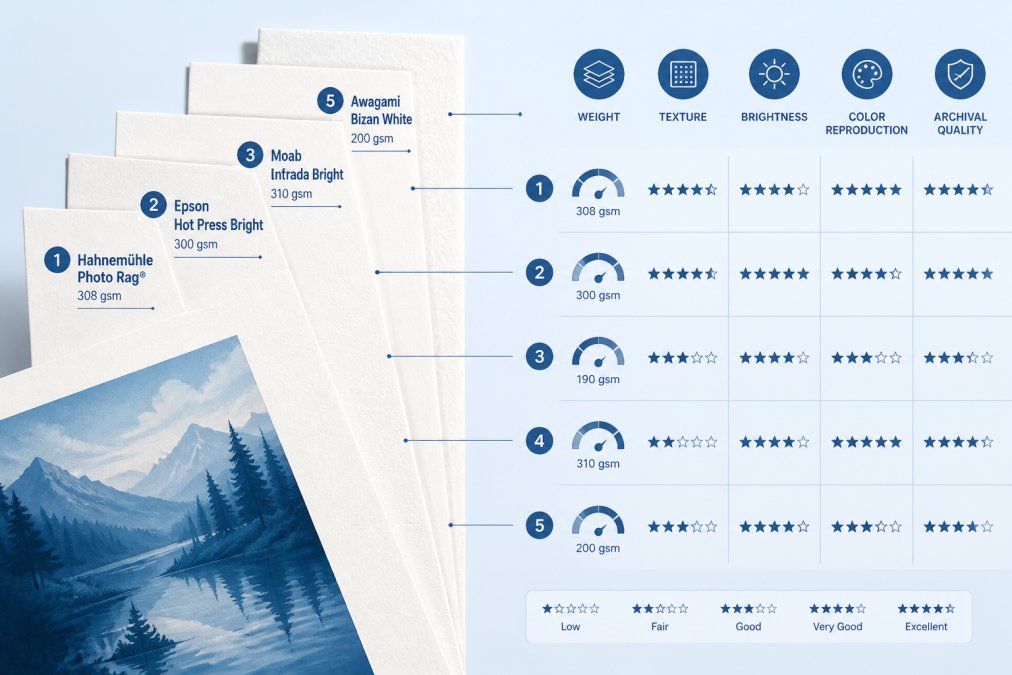
Hahnemühle Photo Rag 308 gsm
Hahnemühle Photo Rag 308 gsm is the industry standard for museum-quality archival matte art prints. This 100% cotton rag paper delivers a smooth surface with subtle felt texture, producing deep blacks and exceptional tonal separation. When paired with pigment-based inks, it achieves the color longevity and archival stability that galleries demand.
What makes this paper exceptional: it's recognized globally as the benchmark for fine art reproduction. The smooth surface accepts pigment ink evenly, eliminating ink pooling or uneven absorption. The natural white tone creates a refined aesthetic that complements both color and black-and-white work.
The drawback is cost and handling. This paper commands premium pricing and requires careful handling to avoid fingerprints. For professionals and serious collectors, these are acceptable tradeoffs.
Best for: Professional photographers, gallery submissions, and collectors who prioritize recognized archival standards.
Moab Entrada Rag Bright 300
Moab Entrada Rag Bright 300 offers maximum color vibrancy combined with archival durability. This 100% cotton rag paper uses a bright white base with proprietary inkjet coatings that enhance color saturation and detail. At 300 gsm, it's slightly lighter than Photo Rag but still substantial. The smooth, soft tooth surface mimics hot-press watercolor paper.
Where Entrada excels: color-forward work. The bright white base amplifies color gamut and contrast. It's double-sided printable, which matters for experimental or portfolio work. The limitation is aesthetic preference, the bright white can feel clinical compared to the natural white of traditional rag papers.
Best for: Fine art photographers working with color, artists seeking maximum color saturation, and those printing contemporary work.
Epson Legacy Etching
Epson Legacy Etching replicates the tactile experience of traditional etching paper while maintaining modern inkjet performance. This 100% cotton fiber paper features a slightly textured matte surface and comes in 314 gsm. The surface is OBA-free and acid/lignin-free, meeting archival standards without optical brighteners that yellow over time.
The appeal is textural. The etching surface creates a subtle grain that catches light, adding depth to printed images. For work with subtle tonal transitions, landscapes, and portraits, this texture enhances the final result. The trade: texture can slightly soften fine art photography with high detail. Smoother papers like Photo Rag will perform better for maximum sharpness.
Best for: Artists and photographers valuing tactile presentation and those creating work with subtle tonal gradations.
Canson Infinity Arches BFK Rives Pure White
Canson Infinity Arches BFK Rives Pure White combines traditional cylinder-mould manufacturing with modern archival standards. This 100% cotton-based paper uses a pure white tone (no optical brighteners) and soft grain finish at 310 gsm. The manufacturing process creates consistent quality across sheets, important for series work or portfolio printing.
What distinguishes this paper: manufacturing heritage. Cylinder-mould production creates a naturally sized surface that accepts ink differently than machine-made alternatives. The pure white (OBA-free) ensures long-term color stability with no yellowing.
The catch: availability and pricing variability. This paper isn't stocked by every supplier, and prices fluctuate significantly by retailer.
Best for: Traditionalists valuing old-world manufacturing, artists working in black and white, and those prioritizing OBA-free substrates.
Ilford Galerie Prestige Smooth Cotton Rag
Ilford Galerie Prestige Smooth Cotton Rag represents professional-grade simplicity. This 100% cotton rag paper features a very smooth matte surface, exceptional opacity, and no optical brighteners at 310 gsm. The paper is designed specifically for inkjet printing, with coatings optimized for pigment ink absorption and color stability.
The strength is consistency and performance. Ilford's heritage in photographic materials translates to reliable color rendering and image stability. The smooth surface delivers crisp detail without texture interference. High opacity prevents show-through even with double-sided printing.
The limitation is aesthetic. Smooth surfaces lack the character of textured alternatives. For pure image quality and archival performance, it excels.
Best for: Professional printers prioritizing consistency, photographers requiring maximum detail, and those printing both sides of paper.
Archival Pigment Ink vs Dye Ink: Which Delivers Longevity
The ink you choose matters as much as the paper. Pigment-based and dye-based inks behave differently, with significant implications for archival stability.
Pigment-based ink uses solid particles suspended in liquid. These particles sit on or near the paper surface, creating images that resist fading and remain stable for 50+ years under normal conditions. Pigment inks produce slightly muted colors compared to dyes but deliver superior black depth and tonal separation. They're the standard for archival matte art prints because their longevity is proven.
Dye-based ink dissolves into the paper fiber, creating images with higher color saturation. However, dye inks fade faster, typically showing visible color shift within 10-15 years under normal light exposure. For archival work, dyes are inadequate.
For archival matte art prints, pigment inks are mandatory. If you're investing in professional-grade paper and archival standards, pigment inks are non-negotiable.
How to Choose Fine Art Paper Weight and Thickness
Paper weight and thickness directly affect how your print feels and performs. Understanding these specifications prevents costly mistakes.
GSM (grams per square meter) is the international standard for paper weight. For archival matte art prints, target 300-310 gsm minimum. Papers below 250 gsm feel flimsy and won't support the ink load of high-quality prints. Papers above 310 gsm become unnecessarily thick unless you're creating special editions.
Caliper measures thickness in mils (thousandths of an inch). For fine art work, 20-24 mil papers provide the ideal balance of substance and manageability. Paper weight affects how your print hangs and displays. Heavier papers (310 gsm+) feel more substantial and resist curling and buckling. Lighter papers (250-280 gsm) work for portfolio or book applications where flexibility matters.
| Paper Weight (GSM) | Caliper (mils) | Best For | Feel & Performance |
|---|---|---|---|
| 200-250 | 10-14 | Budget prints, portfolios | Thin, flexible, prone to curling |
| 250-290 | 14-18 | General fine art | Balanced weight and flexibility |
| 300-310 | 20-24 | Premium archival prints | Substantial, resists buckling |
| 310+ | 24+ | Special editions, portfolios | Heavy, limited flexibility |
Choose based on your display method. Wall-mounted prints benefit from heavier papers (300+ gsm). Portfolio or book applications work with lighter options (250-280 gsm). For archival matte art prints intended as standalone pieces or gallery submissions, 300-310 gsm is the standard.
Best Giclee Printing Services for Museum-Grade Results
Giclee printing, fine art inkjet printing using pigment inks on archival substrates, delivers museum-quality results when executed properly. Professional giclee services invest in wide-format printers capable of handling premium papers and producing consistent color across editions. They use ICC profiling, color management protocols that ensure your digital file translates accurately to physical output.
What separates the best services: they offer proofing before full production. You receive a test print to evaluate color accuracy, detail sharpness, and paper feel before committing to an edition. They provide documentation of archival standards, ink longevity data, and paper specifications.
When evaluating giclee services, ask: What inks do they use (pigment or dye)? What papers are available? Do they offer ICC profiling? Can they provide a proof? Services that answer these clearly are worth the premium.
Key Differences Between Matte and Glossy Finishes
Matte and glossy finishes represent fundamentally different aesthetic and functional choices.
Matte finishes eliminate surface glare, revealing image detail without reflection interference. The non-reflective surface creates a more intimate viewing experience. Matte finishes emphasize tonal subtlety and shadow detail, ideal for fine art photography, portraits, and work where detail matters more than color pop. Matte also forgives dust and fingerprints better than glossy surfaces.
Glossy finishes amplify color saturation and contrast through light reflection. The shiny surface makes colors appear more vivid and creates a sense of depth. Glossy finishes excel with high-color imagery and graphic art. However, glossy surfaces show every fingerprint, dust particle, and reflection. Viewing angle affects perception as reflection changes.
For archival matte art prints, matte finishes are the standard for fine art reproduction because they prioritize image integrity over visual drama. Mind Eracing Studio offers both satin and archival matte options, recognizing that different works demand different presentations. Character-inspired art often benefits from matte finishes, the subtle, refined aesthetic complements imaginative storytelling.
How to Store and Preserve Your Art Prints
Archival matte art prints deserve proper storage to maintain their longevity. Environmental factors, light, humidity, and temperature, determine how well your prints age.
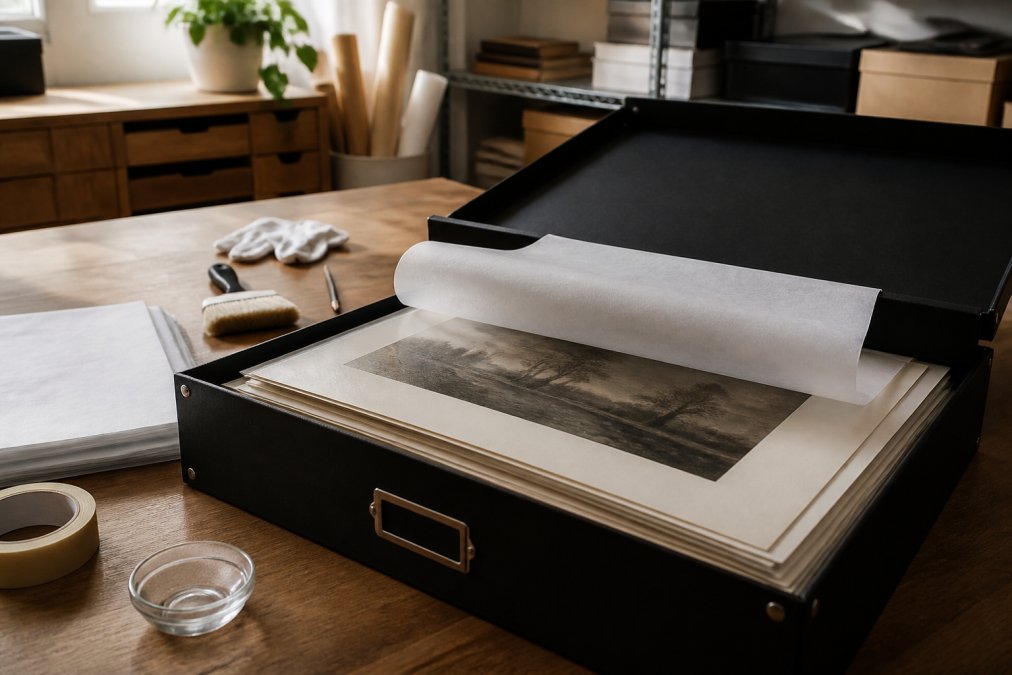
Storage environment matters most. Maintain stable temperature (65-70°F) and relative humidity (30-40%). Fluctuating conditions cause paper expansion and contraction, leading to warping and cracking. Avoid basements and attics. A climate-controlled closet or interior room is ideal.
Light exposure degrades even archival prints. UV light accelerates fading and yellowing. Store prints away from direct sunlight and fluorescent lighting. When displaying, use UV-filtering glass or acrylic for framed work.
Storage materials must be acid-free. Use archival tissue, acid-free boxes, and lignin-free folders. Avoid PVC-based plastics, rubber bands, or adhesive tape. These materials off-gas acids that migrate to paper, causing yellowing.
Handling practices prevent physical damage. Wash hands before touching prints. Avoid fingerprints on the image surface; oils accelerate paper degradation. Store prints flat rather than rolled, and separate each with acid-free tissue.
Framing considerations: Use acid-free matting and backing. Avoid direct contact between the print and frame glass. Choose UV-filtering glass to reduce light damage. Professional framing ensures proper materials and techniques.
Archival matte art prints, properly stored, remain vibrant and stable for generations.
Selecting the right archival matte art prints requires understanding paper quality, ink longevity, and storage practices. The best archival matte art prints combine professional-grade substrates, pigment-based inks, and proper handling to ensure images remain vibrant for decades. When you choose Mind Eracing Studio, you're selecting prints produced on archival matte stock with attention to color accuracy and longevity. Our character-inspired designs deserve substrates that preserve their detail and vibrancy. Explore our collection and discover how archival-quality matte prints elevate your space with lasting beauty and artistic integrity.
Frequently Asked Questions
What makes an art print considered archival?
Archival matte art prints meet strict standards for longevity and color stability. They use acid-free, lignin-free papers (typically 100% cotton rag) combined with pigment-based inks. These materials resist fading and deterioration for 100+ years when stored properly. Look for papers labeled OBA-free (no optical brighteners) and certified by organizations that test print permanence. Mind Eracing Studio uses archival-grade materials to ensure your character-inspired prints remain vibrant for decades.
Should art prints be glossy or matte?
Matte finishes work best for fine art and gallery-quality prints. They reduce glare, provide better color accuracy, and create a sophisticated appearance. Matte surfaces also hide fingerprints and dust better than glossy. Glossy finishes suit commercial photography and vivid color work but can feel less refined for archival pieces. For character-driven art from classic tales, matte finishes enhance the artistic presentation and complement traditional home decor styles.
How do I choose the right weight for matte art paper?
Paper weight, measured in GSM (grams per square meter), affects durability and feel. For archival matte art prints, choose 300 GSM or higher for a substantial, professional quality. 300-310 GSM works for most fine art applications, while 308 GSM is considered an industry standard. Heavier papers feel more luxurious and resist damage during handling and framing. Lighter papers (under 250 GSM) may buckle or feel flimsy, reducing perceived value and longevity.
What's the difference between archival pigment ink and dye ink?
Pigment-based inks use solid particles suspended in liquid, offering superior color permanence and resistance to fading, ideal for archival prints lasting 100+ years. Dye-based inks dissolve directly into the liquid, producing vibrant colors but fading faster (typically 20-30 years). For archival matte art prints you want to preserve, pigment inks are essential. Professional giclee services and high-end printers use pigment systems specifically because they meet museum standards for longevity.
Is archival matte paper good for art prints?
Yes, archival matte paper is the gold standard for fine art and gallery-quality prints. It combines acid-free, lignin-free cotton rag construction with a non-reflective surface that displays color accurately and feels premium. Archival matte paper resists yellowing, fading, and deterioration for over a century. The smooth or textured matte surface enhances detail and tonal depth, making it ideal for character-inspired artwork and prints meant to become lasting home decor investments.
This article was written using GrandRanker